
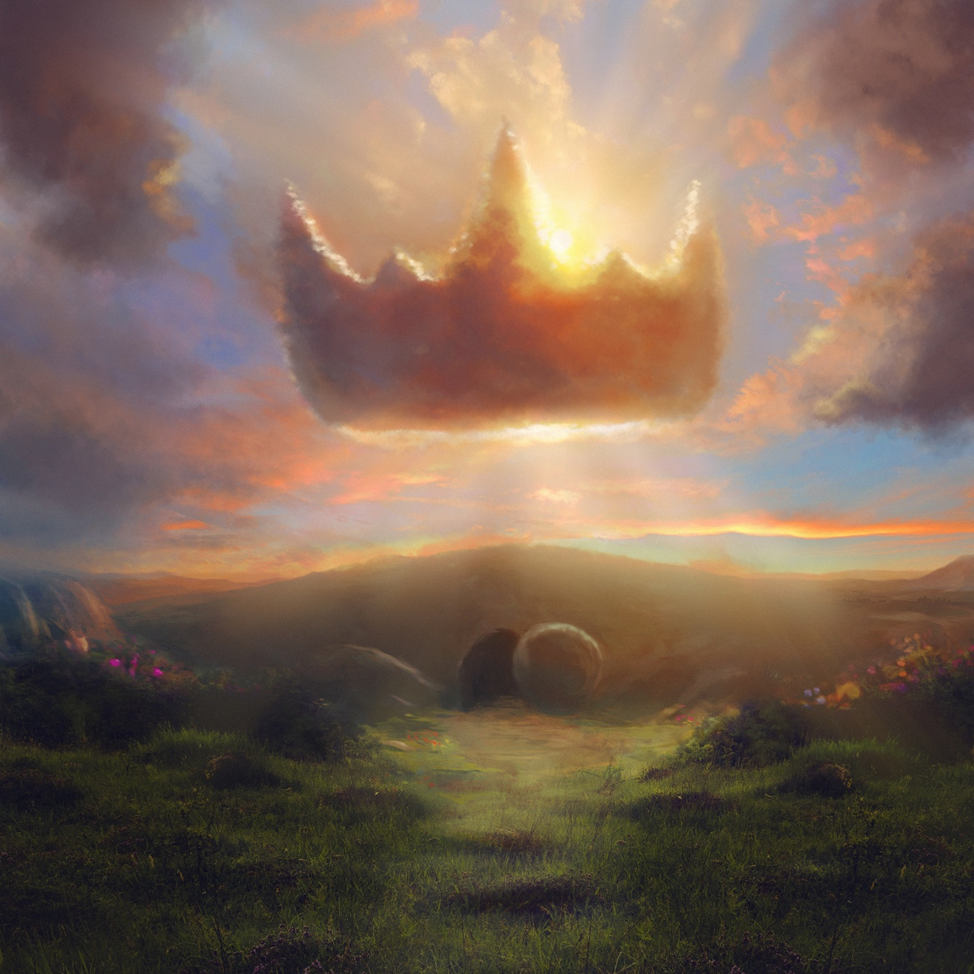
Luke 23:33-43; Colossians 1:3-4, 10-22
Do you know about what led to the division of the kingdom of Israel and Judah?
King Solomon, whose rule had started on such a positive note, eventually turned to forced labor and unequal burden for the people. Solomon privileged his own tribe of Judah, while extracting taxes and labor from the ten northern tribes, all the while building temples and shrines to foreign gods, to appease his many, many spouses and to build favor with other nations.
His goal may have been good, admirable even – to establish Israel among the nations of the world as an equal in wealth and power. The trouble, though, is that Israel was not supposed to be like the other nations, but instead to be a beacon of hope and promise in a troubled world. Solomon broke covenant with God, time and time again, and God responded by anointing Jeroboam as king over the northern tribes, separating Israel and Judah. Jeroboam, sadly, also showed how corrupting positions of power can be, and had a fall from grace of his own.
These ancient kings had an idea that kingship is about exploitation and coercion – that once you were established, you could do anything and get away with it. These models of governance inherently destabilize the balance, favoring the monarch and their chosen ones while burdening the majority of the populace. That’s why the idea of Jesus Christ as King of kings and Lord of lords is so subversive – because Jesus’ leadership flips the script upside down. Solomon burdened the people of his kingdom; Jesus bears the burdens of the whole world. Solomon’s choices divided the nation; Jesus brings the whole world together, reconciling us all to each other and to God.
Jesus was mocked on cross, forced to wear a cruel, torturous crown and “royal robes” that were stained with wine and blood. “Save yourself, King of the Jews!” cried the Roman soldiers. “Aren’t you the Christ? Save yourself, and us!” joined in one of the men being crucified next to Jesus. But Jesus had a greater intent. He knew that salvation was assured, that nothing these mere mocking men could do would have any lasting impact. Jesus knew that his birth, life, death, and resurrection would reorient the world, showing that God’s love thrives in mercy, vulnerability, and compassion. Jesus was already saved – but he wanted to show us that we were saved, too.
When the other man being crucified spoke up to defend him, Jesus reassured him that, despite their terrible circumstances of crucifixion, they would “be together in paradise.” Jesus offers hope in the midst of the worst of what humanity can do, emphasizing connection and restoration that is freely given and not earned. The Kingship of Jesus is expressed in his presence of reconciliation, not the dehumanizing separation of power through dominance.
Now, when Jesus says, “You will be with me in Paradise,” we English speakers tend to picture a tropical resort somewhere, probably on an island – Hawaii, Tahiti, the Bahamas. A place with no responsibilities, of relaxation, of luxury. But, paradise here is actually a direct lift from the Greek, ‘o paradeisos, meaning, “the garden.”
“Today, you will be with me in the garden” has a different ring to it. Yes, even then, “the garden” probably would have been heard as a pleasure garden – a garden of delight – a place of plenty, of beauty, of shade and mist. There’s a deeper reference, though: a nod to humanity being originally created to live in “the garden;” the garden of Eden. Jesus’ revelation of the return to the garden is, in no uncertain way, an invitation to return home. It’s a healing of the greatest exile, a repair of the breach that happened with Eve and Adam. But, like all healings, it’s not a return to the way things had been, but a forward-facing look at rebuilding home when you’ve been away for a long, long time.
Paradise – the garden – may well be overgrown with plants left untended, with animals seeking human companionship. There’s work to be done, not just gardening, but naming, chronicling, and finding artistic fulfilment. The Garden, for Eve and Adam, was a place viewed as though it were all of existence, and then longed for once it was lost. But, once Christ showed us that we were to return to the garden with him, it turns into a new challenge and a place of reconcile, of peace, and of fulfilment.
The fourth century theologian Gregory of Nyssa described the process of reconciling with God as epektasis. The Greek word he uses, epektasis, literally means “stretching out” – as though you were stretching out your arms to God, who, in turn, is stretching out God’s own arms to you. It is an ever-deepening relationship, that I sometimes picture as a spiraling dance. It’s a dance that we can begin now, and continue after our transition to life eternal and triumphant. It’s a dance where we sometimes move apart, and sometimes move close in, but always are in step with God. In stretching out our arms, we connect with others in the dance as well, building momentum on the ongoing deepening of love we share.
Gregory of Nyssa derived this concept from a word that Paul uses in his letter to the Philippians, and detailed further in the famous “Christ-hymn” of Colossians 1. Paul wrote to the church at Colossae when they were in the midst of power struggles between people who believed in God’s power to save and people who thought we needed to save ourselves through invoking mystical and magical powers. (It should go without saying that Paul wholeheartedly believed in the first of those options). The “Christ-Hymn,” whether it was original to Paul or pre-existing, reminds us that Christ is the image of God, the head of all that is created. All things were created through Christ, and all things are reconciled through him, too. The hymn says specifically, “Whether they are thrones or powers, or rulers or authorities, all things were created through him and for him.” Powers, principalities, and authorities were the words the Colossians used to refer to their belief in magic – trying to invoke specific effects by calling on named powers. Paul is reminding them that Christ is above all of that, that it only makes sense to call on God, not an anything below. Don’t try to control the world, but trust that Christ will make things right.
Because, ultimately, Paul writes, “the fullness of God was pleased to live in [Christ], and he reconciled all things to Godself through Christ – whether things on earth or in the heavens. He bought peace through the blood of his cross.” The Christ who reigns from the cross is the Christ who holds all things together. Christ is the center of creation and the center of restoration. In him, heaven and earth come back into harmony. In him, the garden is replanted. In him, the dance of epektasis continues – that eternal deepening of love that will carry us home.
If Jesus can look at a man dying beside him, someone with nothing left to prove, no chance to make amends, no ability to earn anything at all, and say “You will be with me,” then that promise is strong enough for us, too. It is strong enough for the whole world. Christ’s kingship is not a reign of fear or exclusion. It is a reign of reconciliation. It is a reign that brings us home. Your salvation does not depend on perfection. It depends on Christ’s love, and Christ has already stretched out his arms for you.
Christ is above all earthly power and rulership; our allegiance is ultimately to him. Earthly kings divide, while Christ gathers. Earthly empires burden, while Christ carries. Earthly leaders snatch at power, while Christ pours his out. Earthly nations rise and fall, while the kingdom of God restores, reconciles, and renews.
So, if Christ is our King, then our task is clear. We must seek not to dominate, but to serve. We choose mercy over mockery, compassion over contempt, reconciliation over ripping apart. We become gardeners of God’s restored creation, tending the places where love is needed, pulling up weeds of fear, planting seeds of peace wherever we can. Christ is the Way, who leads us to walk with him, following alongside instead of trailing behind.
Christ is the King who brings us home. Home to God, home to one another, home to the garden that is blossoming even now. The gate is open. The light is warm. With arms outstretched, we walk with Christ, discovering that paradise is not far away, but already here among us. It is the place where love grows, where mercy reigns, where every step draws us deeper into the heart of God.
Truly I tell you, today we are in paradise. Amen.
