1 Kings 14
BibleHub
1 At that timeI AbijahII sonIII
Notes on verse 1a
I “time” = et. Probably from anah (to answer, sing, announce); from ad (forever, all, old); from adah (to pass on, advance, decorate oneself). This is a period or season. It can also mean whenever or continually.
II “Abijah” = Abiyyah. From ab (father in a literal or figurative sense – grandfather, chief, ancestor) + Yah (the shortened form of the name of the God of Israel; God, Lord); {from YHVH (proper name of the God of Israel; God, Lord; the self-existent or eternal one); from havah (to become) or hayah (to be, become, happen)}. This is Abijah, meaning “the Lord is my father” or “worshipper of the Lord.”
III “son” = ben. From banah (to build or obtain children). This is son, age, child. It is son in a literal or figurative sense.
of JeroboamIV fell sick.V 2 Jeroboam saidVI to his wife,VII
Notes on verses 1b-2a
IV “Jeroboam” = Yarobam. From rabab (to be or become much or many, multiply) + am (people or nation; a tribe, troops or armies, or figuratively to refer to a flock of animals); {from amam (to darken, hide, associate; creating shadows by huddling together)} OR from rib (properly to toss or grapple; used figuratively to mean wrangling and so for arguments, complaints, or disputes; used in a legal setting for pleading or defending a case) + am (see above). This is Jeroboam, a name meaning “the people increase” or “the people will contend” or “whose people are countless.” See https://www.abarim-publications.com/Meaning/Jeroboam.html
V “fell sick” = chalah. Properly, this is to be worn; hence, being weak, sick, or afflicted. It can also mean to grieve or, positively, to flatter or entreat.
VI “said” = amar. This is to speak, say, answer, command, promise, report.
VII “wife” = ishshah. From ish (man); perhaps from enosh (human, humankind, mortal); from anash (to be weak, sick, or frail). This is woman, wife, or female.
“Go,VIII, IX disguiseX yourself so that it will not be knownXI that you are the wife of Jeroboam,
Notes on verse 2b
VIII “go” = qum. To arise, stand, accomplish, establish, abide. This is rising as in rising against, getting up after being sick or asleep, arising from one state to another, becoming powerful, or rising for action. It can also be standing in a figurative sense.
IX {untranslated} = na. This particle is used for requests or for urging. It can be we pray, now, I ask you, oh. This is the same “na” in “hosanna.”
X “disguise” = shanah. From shana (to change, alter). This is a year, age, old. It can also mean yearly.
XI “known” = yada. This is to know, acknowledge, advise, answer, be aware, be acquainted with. Properly, this is to figure something out by seeing. It includes ideas of observation, recognition, and care about something. It can be used causatively for instruction, designation, and punishment.
and goXII to Shiloh,XIII forXIV the prophetXV
Notes on verse 2c
XII “go” = halak. This is go, come, walk. It is walk literally and figuratively and includes people and animals. It can be used figuratively for one’s moral life – how we walk according to God’s way or against it. It can also refer to the walk of life as in the course one’s life takes, the choices we make, etc.
XIII “Shiloh” = Shiloh. From shalah (to draw out, take away, require) OR from the same as Shiyloh (Shiloh; perhaps “he whose it is” or “tranquil”); perhaps from shalah (to be quiet, safe, tranquil; can imply success or happiness; could also mean to deceive or be negligent). This is Shiloh, perhaps “he whose it is” or “tranquil.”
XIV {untranslated} = hinneh. From hen (lo! Behold! If, though; an expression of surprise). This is to draw attention, show suddenness or surprise, or to emphasize the importance of the coming statement. See! Lo! Behold!
XV “prophet” = nabi. This is prophet, prophecy, speaker, or someone inspired.
AhijahXVI is there, who saidXVII of me that I should be kingXVIII over this people.XIX
Notes on verse 2d
XVI “Ahijah” = Achiyyah. Related to “Abijah” in v1. From ach (brother, kindred, another, other, like) + Yah (see note II above). This is Ahijah, meaning “brother of the Lord” or “an ally is the Lord” or “worshiper of the Lord.” See https://www.abarim-publications.com/Meaning/Ahijah.html
XVII “said” = dabar. This is generally to speak, answer, declare, or command. It might mean to arrange and so to speak in a figurative sense as arranging words.
XVIII “king” = melek. From malak (to be or become king or queen, to rise to the throne, to be crowned; by implication, to take counsel). This is king or royal.
XIX “people” = am. Related to “Jeroboam” in v1. See note IV above.
3 TakeXX with youXXI tenXXII loaves,XXIII
Notes on verse 3a
XX “take” = laqach. This is to take, accept, carry away, receive. It can also have the sense of take a wife or take in marriage.
XXI {untranslated} = yad. This is hand, ability, power. Hand in a literal sense, but also what one can do or the means by which one does it.
XXII “ten” = eser. Perhaps from asar (to tithe, render a tenth of). This is ten or -teen. While 7 is symbolically the number of perfection, ten is also symbolically a number of perfection (but to a lesser degree than 7 is).
XXIII “loaves” = lechem. From lacham (to eat, feed on). This is bread, food, loaf. It can refer to food more generally for people or for animals.
some cakes,XXIV and a jarXXV of honey,XXVI and goXXVII to him;
Notes on verse 3b
XXIV “cakes” = niqqud. 3x in OT– 2x in Joshua 9 & 1x in 1 Kings 14. From the same as naqod (speckled or spotted; its root may refer to something that is branded or marked through a piercing action). This is something that crumbles. It could be cakes or biscuits. It might also refer to something that is moldy.
XXV “jar” = baqbuq. 3x in OT. From baqaq (to empty, devastate, demoralize, luxuriate). This is jar, bottle, or cruse.
XXVI “honey” = debash. Root may mean being gummy. This is honey or honeycomb because it is so sticky. It can also refer to syrup.
XXVII “go” = bo. This is to enter, come in, advance, fulfill, bring offerings, enter to worship, attack. It can also have a sexual connotation.
he will tellXXVIII you what shall happenXXIX to the child.”XXX
4 Jeroboam’s wife didXXXI so;XXXII
Notes on verses 3c-4a
XXVIII “tell” = nagad. This is to declare, make conspicuous, stand in front, manifest, predict, explain.
XXIX “happen” = hayah. Related to “Abijah” in v1 & “Ahijah” in v2. See note II above.
XXX “child” = naar. May be from na’ar (to shake, toss up and down, tumble around). This is a child or a servant. It is a child in their active years so they could be aged anywhere from infancy to adolescence.
XXXI “did” = asah. This is to make, do, act, appoint, become in many senses.
XXXII “so” = ken. Perhaps from kun (properly, in a perpendicular position; literally, to establish, fix, fasten, prepare; figuratively, it is certainty, to be firm, faithfulness, render sure or prosperous). This is to set upright. Generally used figuratively to mean thus, so, afterwards, rightly so.
she set outXXXIII and wentXXXIV to Shiloh and cameXXXV to the houseXXXVI of Ahijah.
Notes on verse 4b
XXXIII “set out” = qum. Same as “go” in v2. See note VIII above.
XXXIV “went” = halak. Same as “go” in v2. See note XII above.
XXXV “came” = bo. Same as “go” in v3. See note XXVII above.
XXXVI “house” = bayit. Related to “son” in v1. Probably from banah (see note III above). This is house, court, family, palace, temple.
Now Ahijah couldXXXVII not see,XXXVIII for his eyesXXXIX were dimXL because of his age.XLI
Notes on verse 4c
XXXVII “could” = yakol. This is to be able, endure, overcome, prevail.
XXXVIII “see” = raah. This is to see in a literal or figurative sense so stare, advise, think, view.
XXXIX “eyes” = ayin. This is eye in a literal or figurative sense so eye, appearance, favor, or a fountain (the eye of the landscape).
XL “were dim” = qum. Same as “go” in v2. See note VIII above.
XLI “age” = seb. 1x in OT. From sib (to have gray hair, become old). This is age or old age.
5 But the LordXLII saidXLIII to Ahijah, “XLIVThe wife of Jeroboam is coming to inquireXLV of you concerning her son,
Notes on verse 5a
XLII “Lord” = YHVH. Related to “Abijah” in v1 & “Ahijah” in v2 & “happen” in v3. See note II above.
XLIII “said” = amar. Same as “said” in v2. See note VI above.
XLIV {untranslated} = hinneh. Same as {untranslated} in v2. See note XIV above.
XLV “inquire” = darash + dabar. Darash is seek, ask, inquire, care for. Generally it means following in pursuit or following as part of a search, which implies seeking or asking. Also used specially to mean worship. Dabar is related to “said” in v2. From dabar (see note XVII above). This is speech, a word, a matter, an affair, charge, command, message, promise, purpose, report, request. It is a word, which implies things that are spoken of in a wide sense.
for he is sick.XLVI Thus and thus you shall sayXLVII to her whenXLVIII she comes. She will pretend to be another woman.”XLIX
Notes on verse 5b
XLVI “is sick” = chalah. Same as “fell sick” in v1. See note V above.
XLVII “say” = dabar. Same as “said” in v2. See note XVII above.
XLVIII {untranslated} = hayah. Same as “happen” in v3. See note XXIX above.
XLIX “pretend to be another woman” = nakar. This is to recognize, examine, take notice, show, scrutinize. It is looking at something in a fixed way, showing perhaps respect or reverence. Alternately, it can show gazing with suspicion. Also, it can mean being strange towards someone or something and rejecting or ignoring it.
6 ButL when Ahijah heardLI the soundLII of her feetLIII
Notes on verse 6a
L {untranslated} = hayah. Same as “happen” in v3. See note XXIX above.
LI “heard” = shama. This is to hear, call, consent, or consider. It implies listening intelligently, giving attention, and, because of these two factors, obedience and action are often implied.
LII “sound” = qol. This is a sound, used often for human voices. Also used when God speaks or angels, animals or instruments. It can be a cry or a noise, thunder or earthquakes and so on.
LIII “feet” = regel. This is foot, endurance, or journey. It is a foot as the means of walking and so it implies a step or a greater journey. It can be used euphemistically for private parts.
as she came inLIV at the door,LV he said,LVI “Come in, wife of Jeroboam; why do you pretend to be another? For I am chargedLVII with heavy tidingsLVIII for you.
Notes on verse 6b
LIV “came in” = bo. Same as “go” in v3. See note XXVII above.
LV “door” = petach. From patach (to open wide in a literal or figurative sense, loosen, plow, carve). This is opening, door, gate, entrance.
LVI “said” = amar. Same as “said” in v2. See note VI above.
LVII “charged” = shalach. This is to send out, away, send for, forsake. It can also mean to divorce or set a slave free.
LVIII “heavy tidings” = qasheh. From qashah (to be fierce, cruel, dense, tough, severe). This is hard, severe, heavy, obstinate, hard-hearted.
7 Go,LIX tellLX Jeroboam, ‘Thus saysLXI the Lord, the GodLXII of Israel:LXIII
Notes on verse 7a
LIX “go” = halak. Same as “go” in v2. See note XII above.
LX “tell” = amar. Same as “said” in v2. See note VI above.
LXI “says” = amar. Same as “said” in v2. See note VI above.
LXII “God” = Elohim.
LXIII “Israel” = Yisrael. From sarah (to persist, exert oneself, contend, persevere, wrestle, prevail) + El (God or god). This is Israel, meaning God strives or one who strives with God; new name for Jacob and for his offspring. This refers to the people and to the land.
BecauseLXIV I exaltedLXV you from amongLXVI the people, madeLXVII you leaderLXVIII over my people Israel,
Notes on verse 7b
LXIV “because” = yaan. Related to “time” in v1. From anah (see note I above). This is because, since, for the sake of, giving a reason.
LXV “exalted” = rum. This is to rise or raise, to be high literally or figuratively. So it can also mean to exalt or extol.
LXVI “among” = tavek. This is among, middle, in the midst, the center. Perhaps, properly, to sever.
LXVII “made” = natan. This is to give, put, set, offer. It is to give literally or figuratively.
LXVIII “leader” = nagid. Related to “tell” in v3. From nagad (see note XXVIII above). This is a commander or leader as the one who stands at the front, whether in a military, religious, or civic setting. It can also mean honorable or noble in an abstract sense.
8 and tore the kingdomLXIX awayLXX from the house of DavidLXXI to giveLXXII it to you,
Notes on verse 8a
LXIX “kingdom” = mamlakah. Related to “king” in v2. From the same as melek (see note XVIII above). This is kingdom, dominion, sovereignty, rule. It can also refer to the realm.
LXX “tore…away” = qara. This is to tear or cut out in a literal or figurative sense. It can also be to revile or to apply eye make up – as though they are made to look larger.
LXXI “David” = David. From the same as dod (beloved, love, uncle); the root may mean to boil, which is used figuratively to describe love. So, this implies someone you love such as a friend, a lover, or a close family member like an uncle. David’s name likely means something like “beloved one.”
LXXII “give” = natan. Same as “made” in v7. See note LXVII above.
yet you have not beenLXXIII like my servantLXXIV David, who keptLXXV my commandmentsLXXVI
Notes on verse 8b
LXXIII “been” = hayah. Same as “happen” in v3. See note XXIX above.
LXXIV “servant” = ebed. From abad (to work, serve, compel; any kind of work; used causatively, can mean to enslave or keep in bondage). This is a servant, slave, or bondservant.
LXXV “kept” = shamar. This is to keep, watch, or preserve. It means to guard something or to protect it as a thorny hedge protects something.
LXXVI “commandments” = mitsvah. From tsavah (to charge, command, order, enjoin). This is a commandment, law, ordinance obligation, or tradition. It is something commanded whether by God or by a human authority. This term is sometimes used collectively to refer to the Law.
and followedLXXVII me with allLXXVIII his heart,LXXIX
Notes on verse 8c
LXXVII “followed” = halak + achar. Halak is the same as “go” in v2. See note XII above. Achar is from achar (to remain behind, linger, continue, be behind, or delay; can also imply procrastination). This is after or the last part, following.
LXXVIII “all” = kol. From kalal (to complete). This is all or every.
LXXIX “heart” = lebab. May be related to labab (to encourage; properly, to be encased as with fat; used in a good sense, this means to transport someone with love; used in a bad sense, it can mean to dull one’s senses). This is the heart, courage, one’s inner self, the mind, or the will. Heart is only used in a figurative sense in the Old and New Testaments.
doing onlyLXXX that which was rightLXXXI in my sight,LXXXII
Notes on verse 8d
LXXX “only” = raq. From the same as raq (thin, surely, only); perhaps from raqaq (to spit). This is but, except, at least. In the sense of being thin, it figuratively refers to some kind of limit.
LXXXI “right” = yashar. From yashar (to be straight, right, even, smooth, or agreeable; figuratively, to make something pleasant or prosperous). This is straight, right, level. Also, it is pleasing, whether pleasing God or pleasing other people. So, it is upright or righteous.
LXXXII “sight” = ayin. Same as “eyes” in v4. See note XXXIX above.
9 but you have done evilLXXXIII above all those who were beforeLXXXIV you and have goneLXXXV
Notes on verse 9a
LXXXIII “evil” = ra’a’. This is to be evil, bad, afflict. Properly, it means to spoil – to destroy by breaking into pieces. Figuratively, it is to cause something to be worthless. It is bad in a physical, social, or moral sense – something that displeases, does harm or mischief, punishes or vexes.
LXXXIV “before” = paneh. From panah (to turn, face, appear). This is face in a literal or figurative sense. It could be face, presence, anger, respect. It can also be used of God to indicate divine favor or presence.
LXXXV “gone” = halak. Same as “go” in v2. See note XII above.
and madeLXXXVI for yourself otherLXXXVII godsLXXXVIII and cast images,LXXXIX
Notes on verse 9b
LXXXVI “made” = asah. Same as “did” in v4. See note XXXI above.
LXXXVII “other” = acher. Related to “followed” in v8. From achar (see note LXXVII above). This is following, next, strange, other.
LXXXVIII “gods” = elohim. Same as “God” in v7. See note LXII above.
LXXXIX “cast images” = massekah. From nasak (to cover, pour out, offer; by analogy anointing a king). This is a pouring out or over. So it could be pouring molten metal to cast an image, making a libation (pouring out a drink offering), or otherwise covering.
provoking me to anger,XC and have thrustXCI me behindXCII your back,XCIII
Notes on verse 9c
XC “provoking…to anger” = kaas. This is to provoke, be angry, grieve, trouble.
XCI “thrust” = shalak. This is to throw, fling, or hurl. It can also be to throw away in a literal or figurative sense.
XCII “behind” = achar. Same as “followed” in v8. See note LXXVII above.
XCIII “back” = gav. 3x in OT. A form of gev (the back or body; by analogy, among or in the middle); from ga’ah (to rise up, increase, grow, be highly exalted; figuratively to be majestic). This is the back.
10 thereforeXCIV, XCV I will bringXCVI evilXCVII upon the house of Jeroboam.
Notes on verse 10a
XCIV “therefore” = ken. Same as “so” in v4. See note XXXII above.
XCV {untranslated} = hen. Related to {untranslated} in v2. See note XIV above.
XCVI “bring” = bo. Same as “go” in v3. See note XXVII above.
XCVII “evil” = ra’. Related to “evil” in v9. From ra’a’ (see note LXXXIII above). This is bad, disagreeable, that which causes pain, misery, something having little or no value, something that is ethically bad, wicked, injury, calamity. This refers to anything that is not what it ought to be – a natural disaster, a disfigurement, an injury, a sin.
I will cut offXCVIII from Jeroboam every male,XCIX both bondC and freeCI in Israel,
Notes on verse 10b
XCVIII “cut off” = karat. This is to cut down, cut off, or make a covenant (idiom for making a covenant is “to cut a covenant”). It can also mean to destroy, fail, or consume.
XCIX “male” = shathan + qir. Literally, “who pees against the wall.” Shathan is 6x in OT. From shen (urine). This is to urinate. Qir is perhaps from qur (to dig, destroy, wall up). This is a wall, ceiling, surface, mason, or town.
C “bond” = atsar. To inclose, restrain, keep, hold back, or prevail. It can also mean to maintain, rule, or gather together.
CI “free” = azab. To loosen, relinquish, permit, forsake, fail, leave destitute.
and will consumeCII the house of Jeroboam, just as one burns upCIII dungCIV until it is all gone.CV
Notes on verse 10c
CII “consume” = ba’ar + achar. Ba’ar is to burn, consume, heat, remove. It can also be to consume by a fire or through eating, being brutish or wasting. Achar is the same as “followed” in v8. See note LXXVII above.
CIII “burns up” = ba’ar. Same as “consume” in v8. See note CII above.
CIV “dung” = galal. 1x in OT. From galal (to roll, roll away, wallow, commit, remove; rolling in a literal or figurative sense). This is dung – as something that is rolled into balls.
CV “is all gone” = tamam. This is to finish or accomplish. It is to make perfect, demonstrate that you are upright, consume or cease. It is to complete in a literal or figurative sense, positive or negative.
11 Anyone belonging to Jeroboam who diesCVI in the cityCVII the dogsCVIII shall eat,CIX
Notes on verse 11a
CVI “dies” = mut. This is to die in a literal or figurative sense. It can also refer to being a dead body.
CVII “city” = iyr. From uwr (to awaken or wake oneself up). This can mean excitement in the sense of wakefulness or city. Properly, this is a place that is guarded. Guards kept schedules according to watches. This sense of the word would include cities as well as encampments or posts that were guarded.
CVIII “dogs” = keleb. This is yelping or attacking. It can also refer to a dog or it can be a term used for a male prostitute.
CIX “eat” = akal. This is to eat, devour, burn up, or otherwise consume. It can be eating in a literal or figurative sense.
and anyone who dies in the open countryCX the birdsCXI of the airCXII shall eat, for the Lord has spoken.’CXIII
Notes on verse 11b
CX “open country” = sadeh. From the same as shadday (almighty, field, land); from shadad (to devastate, ruin, destroy, oppress, be powerful). Or, it may be from a word that means to spread out. This is field, ground, soil, or land. It can be used to mean wild as in a wild animal.
CXI “birds” = oph. From uph (to fly, flee, shine, be weary, be faint). This is a flying creature.
CXII “air” = shamayim. Root may mean being lofty. This is sky, the air, or heaven. It is in a dual noun form so this might refer to the part of the sky where the clouds move on the one hand and the part beyond that where the sun, moon, and stars are on the other hand.
CXIII “spoken” = dabar. Same as “said” in v2. See note XVII above.
12 Therefore set out, goCXIV to your house. When your feet enterCXV the city, the childCXVI shall die. 13 All Israel shall mournCXVII for him and buryCXVIII him,
Notes on verses 12-13a
CXIV “go” = halak. Same as “go” in v2. See note XII above.
CXV “enter” = bo. Same as “go” in v3. See note XXVII above.
CXVI “child” = yeled. From yalad (to bear, bring forth; can mean to act as midwife or to show one’s lineage). This is something born – so, offspring, youth, fruit. It is the same word used in Isaiah 9:6 “for a child will be born to us.”
CXVII “mourn” = saphad. This is to wail, mourn. Properly, it is lamenting by tearing one’s hair and beating one’s chest. It implies wailing.
CXVIII “bury” = qabar. This is to bury or inter. It could also refer to the person who does the burying.
for he aloneCXIX of Jeroboam’s family shall come to the grave,CXX because in him there is foundCXXI somethingCXXII pleasingCXXIII to the Lord, the God of Israel, in the house of Jeroboam.
Notes on verse 13b
CXIX “alone” = bad. From badad (to divide or be separated; alone, solitary, lonely, isolated, straggler). This is apart, alone, separation, body part, tree branch, except. It can also be a city’s chief.
CXX “grave” = qeber. Related to “bury” in v13. From qabar (see note CXVIII above). This is a place where one is buried such as a grave or tomb.
CXXI “found” = matsa. This is to find, catch or acquire. It can also mean to come forth or appear. Figuratively, this can mean to meet or be together with.
CXXII “something” = dabar. Same as “inquire” in v5. See note XLV above.
CXXIII “pleasing” = tob. From tob (to be pleasing, to be good). This is good, beautiful, pleasant, agreeable, bountiful, at ease. This word is used for goodness as a concept, a good thing, a good person. This can refer to prosperity and welfare as well as joy, kindness, sweetness, and graciousness. So, this is ethically good, but also enjoyably good.
14 Moreover the Lord will raise upCXXIV for himself a king over Israel who shall cut off the house of Jeroboam today,CXXV evenCXXVI right now!CXXVII
Notes on verse 14
CXXIV “raise up” = qum. Same as “go” in v2. See note VIII above.
CXXV “today” = zeh + yom. Literally, “this day.” Yom has a root that may mean being hot. This is the day in a literal or figurative sense. It can also mean birth, age, daylight, continually or other references to time.
CXXVI “even” = gam. This is also, moreover, again.
CXXVII “now” = attah. Related to “time” in v1 & “because” in v7. Perhaps from et (see note I above). This is now, from now on.
15 “The Lord will strikeCXXVIII Israel as a reedCXXIX is shakenCXXX in the water;CXXXI
Notes on verse 15a
CXXVIII “strike” = nakah. This is to hit whether lightly or severely. It can be used in a literal or figurative sense. So, this could be beat, punish, give wounds, kill, or slaughter.
CXXIX “reed” = qaneh. Perhaps from qanah (to get, buy, redeem, create, possess). This is reed, branch, stalk, beam, or measuring rod.
CXXX “shaken” = nud. This is to nod, waver, wander, flee, show grief, disappear. It can be nodding the head as a sign of sympathy or consolation. It could also be tossing one’s head to show contempt or to taunt.
CXXXI “water” = mayim. This is water, waters, or waterway in a general sense. Figuratively, it can also mean juice, urine, or semen.
he will root upCXXXII Israel out of this goodCXXXIII landCXXXIV that he gave to their ancestorsCXXXV and scatterCXXXVI
Notes on verse 15b
CXXXII “root up” = natash. Properly, this is to beat or pound as when something is beaten in order to expand or disperse. It can be leave, abandon, allow, neglect, spread, fall, or thrust out.
CXXXIII “good” = tob. Same as “pleasing” in v13. See note CXXIII above.
CXXXIV “land” = adamah. From the same as adam (man, humankind); perhaps from ‘adom (to be red). This is ground, earth, soil as red, or land.
CXXXV “ancestors” = ab. Related to “Abijah” in v1. See note II above.
CXXXVI “scatter” = zarah. This is to scatter or toss around. It can imply to disperse, cast away, or to scrutinize.
them beyondCXXXVII the Euphrates,CXXXVIII because they have madeCXXXIX their sacred poles,CXL provoking the Lord to anger.
Notes on verse 15c
CXXXVII “beyond” = eber. From abar (to pass over, pass through, or pass by; cross over or to alienate; used for transitions). This is the place across or beyond, by, from, other, the opposite side, against, over. It often refers to the other side of the Jordan river or toward the east.
CXXXVIII “Euphrates” = nahar. From nahar (to flow, sparkle, be cheerful). This is a stream, river, or flood. Particularly used for the Nile or Euphrates. Figuratively, this can mean prosperity.
CXXXIX “made” = asah. Same as “did” in v4. See note XXXI above.
CXL “sacred poles” = Asherah. Perhaps from Ugaritic atrt (Athirat, Asherah, goddess who is wife of El) OR from Phoenician sattar (Astarte) OR from asher (to go straight). This is asherah – sacred pole or goddess Asherah or Astarte. It may mean “progression” or “happiness” or “fortuna.” See https://en.wiktionary.org/wiki/%D7%90%D7%A9%D7%A8%D7%94#Hebrew & https://www.abarim-publications.com/Meaning/Asherah.html
16 He will give Israel upCXLI becauseCXLII of the sinsCXLIII of Jeroboam, which he sinnedCXLIV and which he caused Israel to commit.”CXLV
Notes on verse 16
CXLI “give…up” = natan. Same as “made” in v7. See note LXVII above.
CXLII “because” = galal. Related to “dung” in v10. 10x in OT. Perhaps from galal (see note CIV above). This is an account or because.
CXLIII “sins” = chatta’ah. From chata’ (to miss or go wrong and so to sin, bear the blame; it can also include the sense of forfeiting or lacking). This is sin itself as well as punishment for sin. It is sometimes used specifically to refer to sin that is habitual.
CXLIV “sinned” = chata. Related to “sins” in v16. See note CXLIII above.
CXLV “caused…to commit” = chata. Same as “sinned” in v16. See note CXLIV above.
17 Then Jeroboam’s wife got upCXLVI and went away,CXLVII and she came to Tirzah.CXLVIII As she came to the thresholdCXLIX of the house, the childCL died.
Notes on verse 17
CXLVI “got up” = qum. Same as “go” in v2. See note VIII above.
CXLVII “went away” = halak. Same as “go” in v2. See note XII above.
CXLVIII “Tirzah” = Tirtsah. 18x in OT. From ratsah (to be pleased with, delight, take pleasure in, or accept with favor; to approve or consent regarding something; can be used specifically of satisfying debts or being pardoned). This is Tirzah or Tirtsah, meaning “delight” or “pleasantness” or “pleasure” or “beauty.” See https://www.abarim-publications.com/Meaning/Tirzah.html
CXLIX “threshold” = saph. From saphaph (to guard an entry, be a doorkeeper, snatch). This is a basin or cup. It can also be a door post or threshold.
CL “child” = naar. Same as “child” in v3. See note XXX above.
18 All Israel buried him and mourned for him, according to the wordCLI of the Lord that he spoke byCLII his servant the prophet Ahijah.
19 Now the restCLIII of the actsCLIV of Jeroboam, how he warredCLV and how he reigned,CLVI
Notes on verses 18-19a
CLI “word” = dabar. Same as “inquire” in v5. See note XLV above.
CLII {untranslated} = yad. Same as {untranslated} in v3. See note XXI above.
CLIII “rest” = yether. From yathar (to jut over, remain behind, preserve, to excel). This is a remainder or excess. It can imply abundant or superiority. Additionally, it can be cord a free-hanging rope.
CLIV “acts” = dabar. Same as “inquire” in v5. See note XLV above.
CLV “warred” = lacham. Related to “loaves” in v3. See note XXIII above.
CLVI “reigned” = malak. Related to “king” in v2 & “kingdom” in v8. See note XVIII above.
CLVIIare writtenCLVIII in the BookCLIX of the AnnalsCLX of the Kings of Israel.
Notes on verse 19b
CLVII {untranslated} = hinneh. Same as {untranslated} in v2. See note XIV above.
CLVIII “written” = kathab. This is to inscribe, write, record, or decree.
CLIX “Book” = sepher. Perhaps from saphar (to tally or record something; to enumerate, recount, number, celebrate, or declare). This can be writing itself or something that is written like a document, book, letter, evidence, bill, scroll, or register.
CLX “Annals” = dabar + yom. Literally, “acts of the days.” Dabar is the same as “inquire” in v5. See note XLV above. Yom is the same as “today” in v14. See note CXXV above.
20 The timeCLXI that Jeroboam reigned was twentyCLXII-twoCLXIII years;CLXIV
Notes on verse 20a
CLXI “time” = yom. Same as “today” in v14. See note CXXV above.
CLXII “twenty” = esrim. Related to “ten” in v3. From the same as eser (see note XXII above). This is twenty or twentieth.
CLXIII “two” = shenayim. Related to “disguise” in v2. From sheni (double, again, another, second); from shana (see note X above). This is two, both, second, couple.
CLXIV “years” = shanah. From shana (to change, alter). This is a year, age, old. It can also mean yearly.
then he sleptCLXV with his ancestors, and his son NadabCLXVI succeededCLXVII him.
Notes on verse 20b
CLXV “slept” = shakab. This is to lie down, lodge. It is lying for sleep, sex, or other reasons.
CLXVI “Nadab” = Nadab. From nadab (to offer voluntarily, incite, impel; to volunteer to be a soldier or offer freely). This is Nadab, a name meaning “liberal” or “willing” or “volunteer” or “generous” or “noble.” See https://www.abarim-publications.com/Meaning/Nadab.html
CLXVII “succeeded” = malak…tachat. Literally, “reigned…in his place.” Malak is the same as “reigned” in v19. See note CLVI above. Tachat is underneath, below, the bottom, instead of.
21 Now RehoboamCLXVIII son of SolomonCLXIX reigned in Judah.CLXX
Notes on verse 21a
CLXVIII “Rehoboam” = Rechabam. Related to “Jeroboam” in v1 & “people” in v2. From rachab (to grow wide or enlarge in a literal or figurative sense; extend, relieve, rejoice, or speak boldly) + am (see note IV above). This is Rehoboam, meaning “a people are enlarged” or “people of width” or “enlarges the people.” See https://www.abarim-publications.com/Meaning/Rehoboam.html
CLXIX “Solomon” = Shelomoh. From shalam (to be complete or sound; to have safety mentally, physically, or extending to one’s estate; so, if these things are safe and complete, the implication is that one would be friendly; and, if being friendly, one would make amends and that friendship would be reciprocated). This is Solomon or Shelomoh, meaning “peaceful.” It is the same word as the Hebrew word for peace – shalom.
CLXX “Judah” = Yehudah. Probably from yadah (to throw one’s hands into the air in a gesture of praise); from yad (hand). This is Judah, meaning “praised.”
Rehoboam was fortyCLXXI-oneCLXXII years oldCLXXIII when he began to reign, and he reigned seventeenCLXXIV years
Notes on verse 21b
CLXXI “forty” = arbaim. From the same as arba (four); from raba (to make square or be four-sided); perhaps from raba (to lie down flat; can be to lie for mating). This is forty.
CLXXII “one” = echad. Perhaps from achad (to unify, continue on a path; figuratively, to gather one’s thoughts). This is the number one, first, united. It can also be alone, altogether, a certain, a few.
CLXXIII “old” = ben. Same as “son” in v1. See note III above.
CLXXIV “seventeen” = sheba + asar. Sheba is seven or by sevenfold. It can also be used to imply a week or an indefinite number. Symbolically, this is the number of fullness, sacredness, perfection. Asar is related to “ten” in v3 & “twenty” in v20. This is from the same as eser (see note XXII above). This is -teen or -teenth.
in Jerusalem,CLXXV the city that the Lord had chosenCLXXVI out of all the tribesCLXXVII of Israel, to putCLXXVIII his nameCLXXIX there.
Notes on verse 21c
CLXXV “Jerusalem” = Yerushalaim. Related to “Solomon” in v21. From yarah (to throw, shoot, be stunned; to flow as water so figuratively to instruct or teach) + shalam (see note CLXIX above). This is Jerusalem, dwelling of peace.
CLXXVI “chosen” = bachar. This is to choose, appoint, try, excellent.
CLXXVII “tribes” = shebet. This is a rod, staff, club, scepter, dart, or tribe. Literally a stick that can be used for punishing, writing, fighting, walking, ruling; thus, used figuratively for a clan.
CLXXVIII “put” = sim. This is to put or place in a literal or figurative sense. It can be appoint, care, change, make, and may other things.
CLXXIX “name” = shem. Related to “put” in v21. May be from sim (see note CLXXVIII above). This is name, fame, renown. A name was thought to indicate something essential about a person – something about their individuality. So, this word can also mean honor, authority, or character.
His mother’sCLXXX name was NaamahCLXXXI the Ammonite.CLXXXII
Notes on verse 21d
CLXXX “mother’s” = em. This is a mother as binding a family together or a breeding female animal. It could be mother in a literal or figurative sense.
CLXXXI “Naamah” = Naamah. 5x in OT. From Na’am (Naam, meaning “pleasure”); from naem (to be pleasant, beautiful, sweet, or agreeable in a literal or figurative sense). This is Naamah, meaning “pleasantness.” It is a personal name and also the name of a place.
CLXXXII “Ammonite” = Ammonit. Related to “Jeroboam” in v1 & “people” in v2 & “Rehoboam” in v21. 4x in OT. From Ammoni (Ammonite); from Ammon (Ammon, Ammonite; perhaps meaning “tribal”); {from im (with, against, before, beside); {perhaps from amam (see note IV above)} OR from am (see note IV above)} This is a female Ammonite.
22 Judah did what was evilCLXXXIII in the sight of the Lord; they provoked him to jealousyCLXXXIV with their sins that they committed, more than all that their ancestors had done. 23 For they alsoCLXXXV builtCLXXXVI for themselves high places,CLXXXVII pillars,CLXXXVIII
Notes on verses 22-23a
CLXXXIII “evil” = ra’. Same as “evil” in v10. See note XCVII above.
CLXXXIV “provoked…to jealousy” = qanah. From qinah (zeal, jealousy). This is to be zealous or to provoke to jealousy.
CLXXXV “also” = gam. Same as “even” in v14. See note CXXVI above.
CLXXXVI “built” = banah. Related to “son” in v1 & “house” in v4. See note III above.
CLXXXVII “high places” = bamah. The root might mean being high. This is height, wave, or elevation.
CLXXXVIII “pillars” = matstsebah. From natsab (to station, appoint, establish, take a stand). This is literally something that is stationed. So, it could refer to a column, a stump, some kind of image or idol, or a garrison.
and sacred poles on everyCLXXXIX highCXC hillCXCI and underCXCII
Notes on verse 23b
CLXXXIX “every” = kol. Same as “all” in v8. See note LXXVIII above.
CXC “high” = gaboah. From gabah (to be tall, high, exalted, proud, haughty). This is high, tall, long, proud, or arrogant. It could also be a high ranking official, someone exalted, or something lofty.
CXCI “hill” = gibah. From the same as Geba (Geba or Gibeah; hillock); from the same as gabia (cup, bowl, flower; root might mean being convex). This is hill or little hill.
CXCII “under” = tachat. Same as “succeeded” in v20. See note CLXVII above.
every greenCXCIII tree;CXCIV 24 there were also illicit priestsCXCV in the land.CXCVI
Notes on verses 23c-24a
CXCIII “green” = raanan. From raan (to grow luxuriant, grow green). This is to be fresh, green, flourish, be new or prosperous.
CXCIV “tree” = ets. Perhaps from atsah (to shut, fasten, firm up, to close one’s eyes). This is tree or other things related to trees like wood, sticks, or stalks. It can also refer to wood products like a plank or staff or gallows. Additionally, this can refer to a carpenter.
CXCV “illicit priests” = qadesh. 6x in OT. From the same as qodesh (set apart and so sacred; God is different from us and so God is holy/set apart; things we dedicate to God’s service are set apart for God and so they, too, are holy); related to qadash (set apart, consecrated, hallowed, sanctified; something or someone set apart for a holy purpose or use – ceremonially or morally clean). This is an illicit priest, a temple prostitute, or an illicit shrine.
CXCVI “land” = erets. Root may mean to be firm. This is earth, ground, field land, or country.
They committedCXCVII all the abominationsCXCVIII of the nationsCXCIX
Notes on verse 24b
CXCVII “committed” = asah. Same as “did” in v4. See note XXXI above.
CXCVIII “abominations” = toebah. Perhaps from ta’ab (to abhor or morally detest). This is something that instills one with moral contempt or disgust. It can mean abhorrence and is often in reference to idolatry or idols.
CXCIX “nations” = goy. Related to “back” in v9. From the same root as gevah (the back, person, or body); related to gev (see note XCIII above). This is nation or people. Often used to refer to Gentiles or foreign nations. It can also be used figuratively for a group of animals. This is where the Yiddish “goy” comes from.
that the Lord had driven outCC beforeCCI the peopleCCII of Israel.
25 CCIIIIn the fifthCCIV year of King Rehoboam,
Notes on verses 24c-25a
CC “driven out” = yarash. This is inheriting or dispossessing. It refers to occupying or colonizing – taking territory by driving out the previous inhabitants and living there instead of them. By implication, it can mean to seize or rob, to expel, ruin, or impoverish.
CCI “before” = paneh. Same as “before” in v9. See note LXXXIV above.
CCII “people” = ben. Same as “son” in v1. See note III above.
CCIII {untranslated} = hayah. Same as “happen” in v3. See note XXIX above.
CCIV “fifth” = chamishi. From chamesh (five). This is fifth or one-fifth.
King ShishakCCV of EgyptCCVI came upCCVII against Jerusalem; 26 he took awayCCVIII the treasuresCCIX of the house of the Lord and the treasures of the king’s house;
Notes on verses 25b-26a
CCV “Shishak” = Shishaq. 7x in OT. Of Egyptian derivation. This is Shishak who may be the same as Shoshenq I. See https://en.wikipedia.org/wiki/Shishak
CCVI “Egypt” = Mitsrayim. Perhaps from matsor (besieged or fortified place, bulwark, entrenchment; something hemmed in; a siege or distress or fastness); from tsur (to confine, besiege, to cramp). This is Egypt.
CCVII “came up” = alah. This is to go up, approach, ascend, be high, be a priority; to arise in a literal or figurative sense.
CCVIII “took away” = laqach. Same as “take” in v3. See note XX above.
CCIX “treasures” = otsar. Related to “bond” in v10. From atsar (see note C above). This is treasure or the place where one keeps treasure – a depository, storehouse, armory, cellar.
he took everything.CCX He also took away all the shieldsCCXI of goldCCXII that Solomon had made,CCXIII
Notes on verse 26b
CCX “everything” = kol. Same as “all” in v8. See note LXXVIII above.
CCXI “shields” = magen. From ganan (to surround, cover, defend, protect). This is a shield, defense, or figuratively a protector. It can also be used for a crocodile’s hide.
CCXII “gold” = zahab. Root may mean to shimmer. This is gold or something that has the color of gold like oil. It can also refer to a clear sky – to good weather.
CCXIII “made” = asah. Same as “did” in v4. See note XXXI above.
27 so King Rehoboam madeCCXIV shields of bronzeCCXV insteadCCXVI
Notes on verse 27a
CCXIV “made” = asah. Same as “did” in v4. See note XXXI above.
CCXV “bronze” = nechosheth. Perhaps from nechushah (copper, bronze, brass – something made from this metal like a coin or fetter; something that is considered base in contrast to gold or silver.; from nachush (made of bronze or brass, coppery; figuratively, hard); from nachash (to divine, interpret omens, learn from experience, observe; to hiss). This is bronze, copper, steel, brass or something made from copper. So, it could be a coin or chains. It can also figuratively mean something considered lesser in contrast to gold or silver.
CCXVI “instead” = tachat. Same as “succeeded” in v20. See note CLXVII above.
and committedCCXVII them to the handsCCXVIII of the officersCCXIX of the guardCCXX who kept the door of the king’s house. 28 CCXXIAs oftenCCXXII as the king
Notes on verses 27b-28a
CCXVII “committed” = paqad. This is to attend to or visit – can be used for a friendly or violent encounter. So, it can be to oversee, care for, avenge, or charge.
CCXVIII “hands” = yad. Same as {untranslated} in v3. See note XXI above.
CCXIX “officers” = sar. This is chief, leader, ruler, lord, official, governor, prince, military leader. It refers to someone at the top of a rank or class.
CCXX “guard” = ruts. This is to run or rush, divide quickly, bring swiftly. It can also refer to a footman or guard.
CCXXI {untranslated} = hayah. Same as “happen” in v3. See note XXIX above.
CCXXII “as often” = day. This is enough, plenty, overflow, or ability.
went intoCCXXIII the house of the Lord, the guard carriedCCXXIV them and brought them backCCXXV to the guardroom.CCXXVI
Notes on verse 28b
CCXXIII “went into” = bo. Same as “go” in v3. See note XXVII above.
CCXXIV “carried” = nasa. This is to lift in a broad sense, literally and figuratively. So it could be to carry, take, or arise. It could also be bring forth, advance, accept.
CCXXV “brought…back” = shub. To turn back, return, turn away – literally or figuratively. Doesn’t necessarily imply going back to where you started from. This is also the root verb for the Hebrew word for repentance “teshubah.”
CCXXVI “guardroom” = ta + ruts. Ta is 13x in OT. From the base of taah (to draw a line, designate). This is room or chamber. Ruts is the same as “guard” in v27. See note CCXX above.
29 Now the rest of the acts of Rehoboam and all that he did, are they not written in the Book of the AnnalsCCXXVII of the Kings of Judah? 30 There was warCCXXVIII betweenCCXXIX Rehoboam
Notes on verses 29-30a
CCXXVII “Annals” = dabar + yom. Literally “acts of the days.” See note CLX above.
CCXXVIII “war” = milchamah. Related to “loaves” in v3 & “warred” in v19. From lacham (see note XXIII above). This is battle, war, fighting, or one who fights (i.e. a warrior).
CCXXIX “between” = bayin. From bin (to discern, consider, attend to; distinguishing things in one’s mind or, more generally, to understand). This is among, between, interval.
andCCXXX Jeroboam continually.CCXXXI 31 Rehoboam slept with his ancestors and was buried with his ancestors in the city of David. His mother’s name was Naamah the Ammonite. His son AbijamCCXXXII succeededCCXXXIII him.
Notes on verses 30b-31
CCXXX {untranslated} = bayin. Same as “between” in v30. See note CCXXIX above.
CCXXXI “continually” = kol + yom. Literally, “all the days.” Kol is the same as “all” in v8. See note LXXVIII above. Yom is the same as “today” in v14. See note CXXV above.
CCXXXII “Abijam” = Abiyyam. Related to “Abijah” in v1 & “ancestors” in v15. 5x in OT. From ab (see note II above) + yam (root may mean to roar; the sea, often the Mediterranean; the roar of crashing surf; rivers or other sources of water; to the west, to the south). This is Abijam, meaning “feather of the sea,” which is to say a sailor. It could also mean “father of the west” or “father of the future.” See https://www.abarim-publications.com/Meaning/Abijam.html
CCXXXIII “succeeded” = malak…tachat. Literally, “reigned…in his place.” See note CLXVII above.
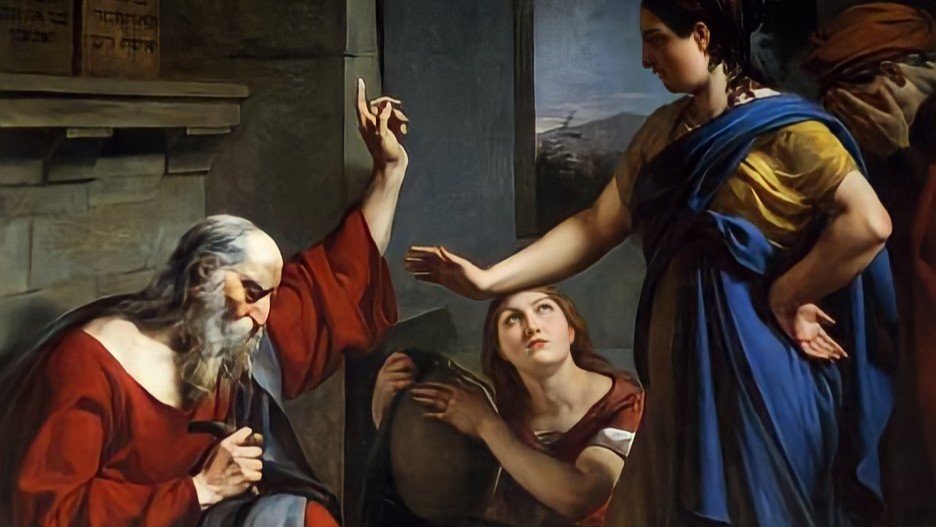
Image credit: “Jeroboam’s Wife and Prophet Ahijah” by Ludovico Venuti, 1822. Posted by Hugo J. Silva, 2022.