1 Kings 15
BibleHub
1 Now in the eighteenthI yearII of KingIII JeroboamIV
Notes on verse 1a
I “eighteenth” = shemoneh + asar. Shemoneh is perhaps from shamen (to shine, which implies being oily, growing fat); from shaman (to grow fat, shine, be oily). This is eight or eighth. It can refer to abundance as being more than 7, the number of sacred fullness. Asar is from the same as eser (ten). This is -teen or -teenth.
II “year” = shanah. From shana (to change, alter). This is a year, age, old. It can also mean yearly.
III “King” = melek. From malak (to be or become king or queen, to rise to the throne, to be crowned; by implication, to take counsel). This is king or royal.
IV “Jeroboam” = Yarobam. From rabab (to be or become much or many, multiply) + am (people or nation; a tribe, troops or armies, or figuratively to refer to a flock of animals); {from amam (to darken, hide, associate; creating shadows by huddling together)} OR from rib (properly to toss or grapple; used figuratively to mean wrangling and so for arguments, complaints, or disputes; used in a legal setting for pleading or defending a case) + am (see above). This is Jeroboam, a name meaning “the people increase” or “the people will contend” or “whose people are countless.” See https://www.abarim-publications.com/Meaning/Jeroboam.html
sonV of Nebat,VI AbijamVII
Notes on verse 1b
V “son” = ben. From banah (to build or obtain children). This is son, age, child. It is son in a literal or figurative sense.
VI “Nebat” = Nebat. From nabat (to behold, look at intently, consider, or scan; to have respect or regard someone favorably). This is Nebat, meaning “regard” or “look” or “aspect.” See https://www.abarim-publications.com/Meaning/Nebat.html
VII “Abijam” = Abiyyam. 5x in OT. From ab (father, ancestor, grandfather; father in a literal or figurative sense) + yam (root may mean to roar; the sea, often the Mediterranean; the roar of crashing surf; rivers or other sources of water; to the west, to the south). This is Abijam, meaning “feather of the sea,” which is to say a sailor. It could also mean “father of the west” or “father of the future.” See https://www.abarim-publications.com/Meaning/Abijam.html
began to reignVIII over Judah.IX 2 He reigned for threeX years in Jerusalem.XI
Notes on verses 1c-2a
VIII “began to reign” = malak. Related to “King” in v1. See note III above.
IX “Judah” = Yehudah. Probably from yadah (to throw one’s hands into the air in a gesture of praise); from yad (hand). This is Judah, meaning “praised.”
X “three” = shalosh. This is three, fork, three times.
XI “Jerusalem” = Yerushalaim. From yarah (to throw, shoot, be stunned; to flow as water so figuratively to instruct or teach) + shalam (to make amends, to be complete or sound). This is Jerusalem, dwelling of peace.
His mother’sXII nameXIII was MaacahXIV
Notes on verse 2b
XII “mother’s” = em. This is a mother as binding a family together or a breeding female animal. It could be mother in a literal or figurative sense.
XIII “name” = shem. May be from sim (to put, place, set). This is name, fame, renown. A name was thought to indicate something essential about a person – something about their individuality. So, this word can also mean honor, authority, or character.
XIV “Maacah” = Maakah. From maak (to pierce, squeeze, stick, handle). This is Maacah or Maakath. It may mean “depression”, “oppression,” or “squeezer.” See https://www.abarim-publications.com/Meaning/Maacah.html
daughterXV of Abishalom.XVI 3 He committedXVII allXVIII
Notes on verses 2c-3a
XV “daughter” = bat. Related to “son” in v1. From ben (see note V above). This is daughter in a literal or figurative sense.
XVI “Abishalom” = Abshalom. Related to “Abijam” in v1 & related to “Jerusalem” in v2. From ab (see note VII above) + shalom (completeness, soundness, welfare, favor, friend, good health; to be safe and figuratively well, happy, at peace, friendly; abstractly, includes the ideas of welfare and prosperity – not in excessive wealth, but in having enough); {from shalam (see note XI above)}. This is Absalom or Abishalom, which means “my father is peace” or “father of peace” or “friendly.”
XVII “committed” = halak. This is go, come, walk. It is walk literally and figuratively and includes people and animals. It can be used figuratively for one’s moral life – how we walk according to God’s way or against it. It can also refer to the walk of life as in the course one’s life takes, the choices we make, etc.
XVIII “all” = kol. From kalal (to complete). This is all or every.
the sinsXIX that his fatherXX didXXI beforeXXII him;
Notes on verse 3b
XIX “sins” = chatta’ah. From chata’ (to miss or go wrong and so to sin, bear the blame; it can also include the sense of forfeiting or lacking). This is sin itself as well as punishment for sin. It is sometimes used specifically to refer to sin that is habitual.
XX “father” = ab. Related to “Abijam” in v1. See note VII above.
XXI “did” = asah. This is to make, do, act, appoint, become in many senses.
XXII “before” = paneh. From panah (to turn, face, appear). This is face in a literal or figurative sense. It could be face, presence, anger, respect. It can also be used of God to indicate divine favor or presence.
his heartXXIII wasXXIV not trueXXV
Notes on verse 3c
XXIII “heart” = lebab. May be related to labab (to encourage; properly, to be encased as with fat; used in a good sense, this means to transport someone with love; used in a bad sense, it can mean to dull one’s senses). This is the heart, courage, one’s inner self, the mind, or the will. Heart is only used in a figurative sense in the Old and New Testaments.
XXIV “was” = hayah. This is to be or become, to happen.
XXV “true” = shalem. Related to “Jerusalem” and “Abishalom” in v2. From shalam (see note XI above). This is safe, blameless, perfect, at peace, whole, friendly. It is complete in a literal or a figurative sense.
to the LordXXVI his God,XXVII like the heart of his father David.XXVIII
Notes on verse 3d
XXVI “Lord” = YHVH. Related to “was” in v3. From havah (to be, become) or hayah (see note XXIV above). This is the name of the God of Israel, the self-existent and eternal one, the tetragrammaton. This pronunciation has been lost to time so “Lord” is generally used in its place.
XXVII “God” = Elohim.
XXVIII “David” = David. From the same as dod (beloved, love, uncle); the root may mean to boil, which is used figuratively to describe love. So, this implies someone you love such as a friend, a lover, or a close family member like an uncle. David’s name likely means something like “beloved one.”
4 Nevertheless, for David’s sakeXXIX the Lord his God gaveXXX him a lampXXXI in Jerusalem, setting upXXXII his son
Notes on verse 4a
XXIX “sake” = maan. From anah (to answer, respond, announce, sing, shout, or testify; to pay attention, which implies responding and, by extension, starting to talk; singing, shouting, testifying, etc.). This is because of, occurring because of a motive or purpose.
XXX “gave” = natan. This is to give, put, set, offer. It is to give literally or figuratively.
XXXI “lamp” = ner. This is to glisten. It is used for a lamp, candle, or light in a literal or figurative sense.
XXXII “setting up” = qum. To arise, stand, accomplish, establish, abide. This is rising as in rising against, getting up after being sick or asleep, arising from one state to another, becoming powerful, or rising for action. It can also be standing in a figurative sense.
afterXXXIII him and establishingXXXIV Jerusalem, 5 because David did what was rightXXXV in the sightXXXVI of the Lord
Notes on verses 4b-5a
XXXIII “after” = achar. From achar (to remain behind, linger, continue, be behind, or delay; can also imply procrastination). This is after or the last part, following.
XXXIV “establishing” = amad. This is to stand up in a literal or figurative sense. So it can be establish, continue, endure, take a stand, act, be a servant, stand still, remain, stand against an enemy.
XXXV “right” = yashar. From yashar (to be straight, right, even, smooth, or agreeable; figuratively, to make something pleasant or prosperous). This is straight, right, level. Also, it is pleasing, whether pleasing God or pleasing other people. So, it is upright or righteous.
XXXVI “sight” = ayin. This is eye in a literal or figurative sense so eye, appearance, favor, or a fountain (the eye of the landscape).
and did not turn asideXXXVII from anythingXXXVIII that he commandedXXXIX him all the daysXL of his life,XLI
Notes on verse 5b
XXXVII “turn aside” = sur. This is to turn aside in a literal or figurative sense – to depart, decline, rebel, remove, or withdraw.
XXXVIII “anything” = kol. Same as “all” in v3. See note XVIII above.
XXXIX “commanded” = tsavah. This is to charge, command, order, appoint, or enjoin. This is the root that the Hebrew word for “commandment” comes from (mitsvah).
XL “days” = yom. Root may mean being hot. This is the day in a literal or figurative sense. It can also mean birth, age, daylight, continually or other references to time.
XLI “life” = chay. From chayah (to live or keep alive literally or figuratively). This is alive, living, lifetime. It can also be used to describe someone’s age. It can refer to animals, plants, water, or a company or congregation of people. It is life in a very broad sense.
exceptXLII in the matterXLIII of UriahXLIV the Hittite.XLV
Notes on verse 5c
XLII “except” = raq. From the same as raq (thin, surely, only); perhaps from raqaq (to spit). This is but, except, at least. In the sense of being thin, it figuratively refers to some kind of limit.
XLIII “matter” = dabar. From dabar (to speak, declare, discuss). This is speech, a word, a matter, an affair, charge, command, message, promise, purpose, report, request. It is a word, which implies things that are spoken of in a wide sense.
XLIV “Uriah” = Uriyah. Related to “was” and “Lord” in v3. From ur (fire, light, the east); {from or (to be or become light, shine)} + Yah (the shortened form of the name of the God of Israel; God, Lord); {from YHVH (see note XXVI above)}. This is Uriah or Urijah, a name meaning “flame of the Lord,” “the Lord is light,” “light of the Lord.” See https://www.abarim-publications.com/Meaning/Uriah.html
XLV “Hittite” = Chitti. From cheth (Heth or Cheth; one of Canaan’s sons from whom perhaps the Hittites descend) OR from hatat (terror, lacking strength or courage); perhaps from hata (to seize; often used of coals from a fire). This is Hittite – perhaps meaning terrors or terrible. See https://www.abarim-publications.com/Meaning/Hittite.html#.XyMgpp5KhPY
6 The warXLVI begun betweenXLVII RehoboamXLVIII
Notes on verse 6a
XLVI “war” = milchamah. From lacham (to eat or feed on; figuratively, to battle as a kind of consumption/destruction). This is battle, war, fighting, or one who fights (i.e. a warrior).
XLVII “between” = bayin. From bin (to discern, consider, attend to; distinguishing things in one’s mind or, more generally, to understand). This is among, between, interval.
XLVIII “Rehoboam” = Rechabam. Related to “Jeroboam” in v1. From rachab (to grow wide or enlarge in a literal or figurative sense; extend, relieve, rejoice, or speak boldly) + am (see note IV above). This is Rehoboam, meaning “a people are enlarged” or “people of width” or “enlarges the people.” See https://www.abarim-publications.com/Meaning/Rehoboam.html
andXLIX Jeroboam continuedL all the days of his life. 7 The restLI of the actsLII of Abijam and all that he did,
Notes on verses 6b-7a
XLIX {untranslated} = bayin. Same as “between” in v6. See note XLVII above.
L “continued” = hayah. Same as “was” in v3. See note XXIV above.
LI “rest” = yether. From yathar (to jut over, remain behind, preserve, to excel). This is a remainder or excess. It can imply abundant or superiority. Additionally, it can be cord a free-hanging rope.
LII “acts” = dabar. Same as “matter” in v5. See note XLIII above.
are they not writtenLIII in the BookLIV of the AnnalsLV of the Kings of Judah? There was war between Abijam andLVI Jeroboam.
Notes on verse 7b
LIII “written” = kathab. This is to inscribe, write, record, or decree.
LIV “Book” = sepher. Perhaps from saphar (to tally or record something; to enumerate, recount, number, celebrate, or declare). This can be writing itself or something that is written like a document, book, letter, evidence, bill, scroll, or register.
LV “Annals” = dabar + yom. Literally, “acts of the days.” Dabar is the same as “matter” in v5. See note XLIII above. Yom is the same as “days” in v5. See note XL above.
LVI {untranslated} = bayin. Same as “between” in v6. See note XLVII above.
8 Abijam sleptLVII with his ancestors,LVIII and they buriedLIX him in the cityLX of David.
Notes on verse 8a
LVII “slept” = shakab. This is to lie down, lodge. It is lying for sleep, sex, or other reasons.
LVIII “ancestors” = ab. Same as “father” in v3. See note XX above.
LIX “buried” = qabar. This is to bury or inter. It could also refer to the person who does the burying.
LX “city” = iyr. From uwr (to awaken or wake oneself up). This can mean excitement in the sense of wakefulness or city. Properly, this is a place that is guarded. Guards kept schedules according to watches. This sense of the word would include cities as well as encampments or posts that were guarded.
Then his son AsaLXI succeededLXII him.
9 In the twentiethLXIII year of King Jeroboam of Israel,LXIV Asa began to reignLXV over Judah;
Notes on verses 8b-9
LXI “Asa” = Asa. Related to Aramaic asaya (physician, healer); from Akkadian a’sum (Azu); from Sumerian Azu (physician, healer). This is Asa, which may mean “healer.” See https://en.wiktionary.org/wiki/Asa
LXII “succeeded” = malak…tachat. Literally, “reigned…in his place.” Malak is the same as “began to reign” in v1. See note VIII above. Tachat is underneath, below, the bottom, instead of.
LXIII “twentieth” = esrim. Related to “eighteenth” in v1. From the same as eser (see note I above). This is twenty or twentieth.
LXIV “Israel” = Yisrael. Related to “God” in v3. From sarah (to persist, exert oneself, contend, persevere, wrestle, prevail) + El (see note XXVII above). This is Israel, meaning God strives or one who strives with God; new name for Jacob and for his offspring. This refers to the people and to the land.
LXV {untranslated} = melek. Same as “King” in v1. See note III above.
10 he reigned fortyLXVI-oneLXVII years in Jerusalem. His mother’s name was Maacah daughter of Abishalom. 11 Asa did what was right in the sight of the Lord, as his father David had done. 12 He put awayLXVIII the illicit priestsLXIX
Notes on verses 10-12a
LXVI “forty” = arbaim. From the same as arba (four); from raba (to make square or be four-sided); perhaps from raba (to lie down flat; can be to lie for mating). This is forty.
LXVII “one” = echad. Perhaps from achad (to unify, continue on a path; figuratively, to gather one’s thoughts). This is the number one, first, united. It can also be alone, altogether, a certain, a few.
LXVIII “put away” = abar. This is to pass over or cross over. It is used for transitions, whether literal or figurative. It can also mean to escape, alienate, or fail. This is the root verb from which “Hebrew” is drawn.
LXIX “illicit priests” = qadesh. 6x in OT. From the same as qodesh (set apart and so sacred; God is different from us and so God is holy/set apart; things we dedicate to God’s service are set apart for God and so they, too, are holy); related to qadash (set apart, consecrated, hallowed, sanctified; something or someone set apart for a holy purpose or use – ceremonially or morally clean). This is an illicit priest, a temple prostitute, or an illicit shrine.
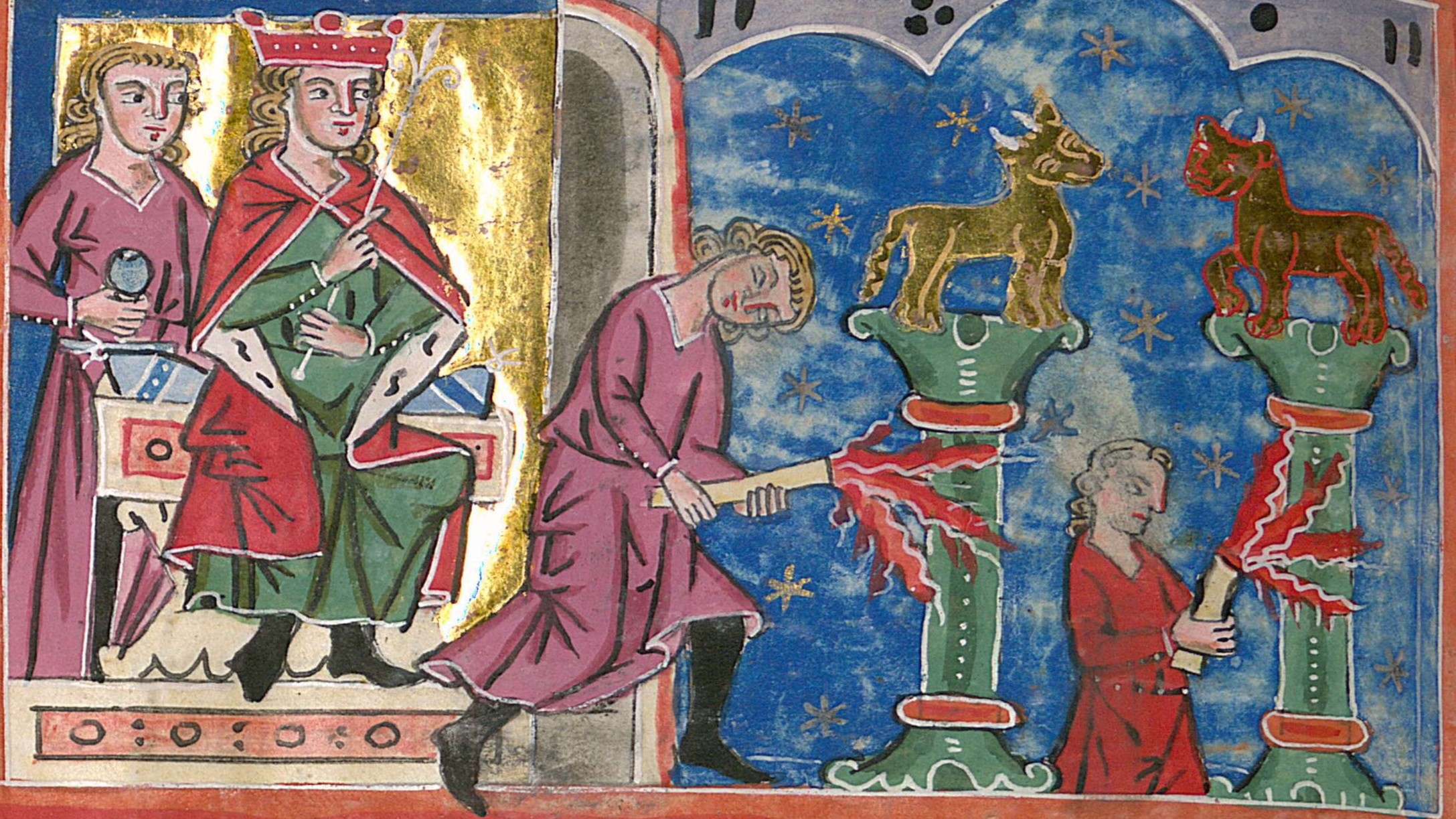
out of the landLXX and removedLXXI all the idolsLXXII that his ancestors had made.LXXIII 13 He alsoLXXIV removed his mother Maacah from being queen mother,LXXV
Notes on verses 12b-13a
LXX “land” = erets. Root may mean to be firm. This is earth, ground, field land, or country.
LXXI “removed” = sur. Same as “turn aside” in v5. See note XXXVII above.
LXXII “idols” = gillul. From galal (to roll in a literal or figurative sense, roll away, roll down, wallow, remove, trust). This is an idol, as carved from a round log.
LXXIII “made” = asah. Same as “did” in v3. See note XXI above.
LXXIV “also” = gam. This is also, moreover, again.
LXXV “queen mother” = gebirah. 6x in OT. From gebir (lord, master); from gabar (to be strong or mighty; to prevail or be insolent). This is queen, queen mother, or lady.
because she had made an abominable imageLXXVI for Asherah;LXXVII Asa cut downLXXVIII
Notes on verse 13b
LXXVI “abominable image” = miphletseth. 4x in OT. From palats (to tremble, rend, quiver). This is a horror or abomination. It can refer to an idol.
LXXVII “Asherah” = Asherah. Perhaps from Ugaritic atrt (Athirat, Asherah, goddess who is wife of El) OR from Phoenician sattar (Astarte) OR from asher (to go straight). This is asherah – sacred pole or goddess Asherah or Astarte. It may mean “progression” or “happiness” or “fortuna.” See https://en.wiktionary.org/wiki/%D7%90%D7%A9%D7%A8%D7%94#Hebrew & https://www.abarim-publications.com/Meaning/Asherah.html
LXXVIII “cut down” = karat. This is to cut down, cut off, or make a covenant (idiom for making a covenant is “to cut a covenant”). It can also mean to destroy, fail, or consume.
her imageLXXIX and burnedLXXX it at the WadiLXXXI Kidron.LXXXII
Notes on verse 13c
LXXIX “image” = miphletseth. Same as “abominable image” in v13. See note LXXVI above.
LXXX “burned” = saraph. This is to burn or kindle. This is the root that “seraphim” comes from.
LXXXI “Wadi” = nachal. From nachal (to take as heritage, inherit, or distribute). This is a river or stream. It could be a wadi or arroyo – sometimes a narrow valley with no water at all, but in strong rains or when winter snow melts, it swells or floods with water.
LXXXII “Kidron” = Qidron. 11x in OT– all in 2 Samuel, 1 Kings, 2 Kings, 2 Chronicles, except 1x in Jeremiah. From qadar (to be dark, grow black; ashy or otherwise having a dark color; can also imply mourning, wearing sackcloth). This is Kidron, a brook or wadi. It may mean “dusky place” or “dark” or “turbid” or “very black” or “full of darkness.” See https://www.abarim-publications.com/Meaning/Kidron.html
14 But the high placesLXXXIII were not taken away.LXXXIV Nevertheless,LXXXV the heart of Asa was true to the Lord all his days. 15 He broughtLXXXVI into the houseLXXXVII of the Lord
Notes on verses 14-15a
LXXXIII “high places” = bamah. The root might mean being high. This is height, wave, or elevation.
LXXXIV “taken away” = sur. Same as “turn aside” in v5. See note XXXVII above.
LXXXV “nevertheless” = raq. Same as “except” in v5. See note XLII above.
LXXXVI “brought” = bo. This is to enter, come in, advance, fulfill, bring offerings, enter to worship, attack. It can also have a sexual connotation.
LXXXVII “house” = bayit. Related to “son” in v1 & “daughter” in v2. Probably from banah (see note V above). This is house, court, family, palace, temple.
the votive giftsLXXXVIII of his father and his own votive gifts—silver,LXXXIX gold,XC and utensils.XCI
Notes on verse 15b
LXXXVIII “votive gifts” = qodesh. Related to “illicit priests” in v12. See note LXIX above.
LXXXIX “silver” = keseph. From kasaph (to long for, be greedy; to become pale). This is silver or money.
XC “gold” = zahab. Root may mean to shimmer. This is gold or something that has the color of gold like oil. It can also refer to a clear sky – to good weather.
XCI “utensils” = keli. From kalah (to end, be finished, complete, prepare, consume, spent, or completely destroyed). This is something that was prepared – any implement, utensil, article, vessel, weapon, or instrument. Also includes jewels, weapons, bags, carriages, and furniture.
16 There was war between Asa andXCII King BaashaXCIII of Israel all their days. 17 King Baasha of Israel went upXCIV against Judah and builtXCV
Notes on verses 16-17a
XCII {untranslated} = bayin. Same as “between” in v6. See note XLVII above.
XCIII “Baasha” = Basha. Perhaps from a root that means to stink. This is Baasha, which may mean “offensiveness” or “stinking” or “revolting.” See https://www.abarim-publications.com/Meaning/Baasha.html
XCIV “went up” = alah. This is to go up, approach, ascend, be high, be a priority; to arise in a literal or figurative sense.
XCV “built” = banah. Related to “son” in v1 & “daughter” in v2 & “house” in v15. See note V above.
RamahXCVI to preventXCVII anyone from going outXCVIII or coming inXCIX to King Asa of Judah.
Notes on verse 17b
XCVI “Ramah” = Ramah. From rum (to be high, rise, exalt self, extol, be haughty; to rise literally or figuratively) OR from ramah (properly, to loosen; figuratively, to deceive to various degrees). This is Ramah, meaning “height” or “lofty place” or “deceit” or “established” or “loose.” See https://www.abarim-publications.com/Meaning/Ramah.html
XCVII “prevent” = bilti + natan. Bilti is from balah (to grow old, wear out, consume, waste, enjoy, fail, decay). This is nothing, not, lest, or except. From its root, it means “a failure of” – used for negative particles. Natan is the same as “gave” in v4. See note XXX above.
XCVIII “going out” = yatsa. This is to go or come out, bring forth, appear. It is to go out in a literal or figurative sense.
XCIX “coming in” = bo. Same as “brought” in v15. See note LXXXVI above.
18 Then Asa tookC all the silver and the gold that were leftCI in the treasuresCII of the house of the Lord and the treasures of the king’s house and gave them into the handsCIII of his servants.CIV
Notes on verse 18a
C “took” = laqach. This is to take, accept, carry away, receive. It can also have the sense of take a wife or take in marriage.
CI “were left” = yathar. Related to “rest” in v7. See note LI above.
CII “treasures” = otsar. From atsar (to store up, hoard). This is treasure or the place where one keeps treasure – a depository, storehouse, armory, cellar.
CIII “hands” = yad. This is hand, ability, power. Hand in a literal sense, but also what one can do or the means by which one does it.
CIV “servants” = ebed. From abad (to work, serve, compel; any kind of work; used causatively, can mean to enslave or keep in bondage). This is a servant, slave, or bondservant.
King Asa sentCV them to King Ben-hadadCVI son of TabrimmonCVII
Notes on verse 18b
CV “sent” = shalach. This is to send out, away, send for, forsake. It can also mean to divorce or set a slave free.
CVI “Ben-hadad” = Ben-hadad. Related to “son” in v1 & “daughter” in v2 & “house” in v15 & “built” in v17. From ben (see note V above) + Hadad (the name of a foreign god and a personal name; it may mean “fierceness,” “chief,” “most eminent,” “most high, “thunder,” or “shout”); {from the same as hedad (a shout, cheer) or from hadad (to thunder, make a loud sound)}. This is Ben-hadad, meaning “son of Hadad.”
CVII “Tabrimmon” = Tabrimmon. 1x in OT. From tob (to be pleasing, to be good) + Rimmon (Rimmon, the name of a god in Syria who is called Baal and who is called Ramanu in Assyria; the name of some cities; may mean “pomegranate” or “apex” or “harvest ready” or “mature mind.”). This is Tabrimmon, meaning “pleasing to Rimmon” or ‘Rimmon is good.” See https://www.abarim-publications.com/Meaning/Rimmon.html & https://en.wikipedia.org/wiki/Rimmon
son of HezionCVIII of Aram,CIX who residedCX in Damascus,CXI saying,CXII
Notes on verse 18c
CVIII “Hezion” = Chezyon. 1x in OT. From chazah (to gaze at – to see or behold; perceiving as a mental process or looking at something with pleasure; seeing a vision). This is Hezion, meaning “vision.”
CIX “Aram” = Aram. Related to “Ramah” in v17. Perhaps from ‘armon (any fortified building – castle, citadel, palace) OR from rum (see note XCVI above). This is Aram, Syria, Mesopotamia – meaning elevated or citadel. See https://www.abarim-publications.com/Meaning/Aram.html#.XqfDX8hKhPY
CX “resided” = yashab. This is to sit and so to remain and so to dwell. It is sitting for any reason – as a judge, in order to ambush, or just sitting quietly. Causatively, this can mean settling or marrying. This can also mean continue, endure, or establish.
CXI “Damascus” = Dammeseq. From Old Aramaic dammasq (Damascus); perhaps related to d-r (dwelling) OR in Syriac darsuq (“a well-watered land”). This is Damascus. See https://en.wikipedia.org/wiki/Damascus.
CXII “saying” = amar. This is to speak, say, answer, command, promise, report.
19 “Let there be an allianceCXIII between me andCXIV you, like that between my father andCXV your father: CXVII am sending you a presentCXVII of silver and gold;
Notes on verse 19a
CXIII “alliance” = berit. Perhaps from barah (to eat, choose, make clear); perhaps from bar (grain, wheat); from barar (to select, purify, cleanse, test, brighten, polish). This is a compact, covenant, alliance, treaty, or league.
CXIV {untranslated} = bayin. Same as “between” in v6. See note XLVII above.
CXV {untranslated} = bayin. Same as “between” in v6. See note XLVII above.
CXVI {untranslated} = hinneh. From hen (lo! Behold! If, though; an expression of surprise). This is to draw attention, show suddenness or surprise, or to emphasize the importance of the coming statement. See! Lo! Behold!
CXVII “present” = shochad. From shachad (to give a present, reward, or bribe; to donate or hire). This is a present, reward, or bribe. It is some kind of donation positive or negative.
go,CXVIII breakCXIX your alliance with King Baasha of Israel, so that he may withdrawCXX from me.”
20 Ben-hadad listenedCXXI to King Asa and sent the commandersCXXII of his armiesCXXIII against the cities of Israel.
Notes on verses 19b-20a
CXVIII “go” = halak. Same as “committed” in v3. See note XVII above.
CXIX “break” = parar. This is to break, defeat, frustrate, cast off, clean, cease.
CXX “withdraw” = alah. Same as “went up” in v17. See note XCIV above.
CXXI “listened” = shama. This is to hear, call, consent, or consider. It implies listening intelligently, giving attention, and, because of these two factors, obedience and action are often implied.
CXXII “commanders” = sar. This is chief, leader, ruler, lord, official, governor, prince, military leader. It refers to someone at the top of a rank or class.
CXXIII “armies” = chayil. From chul (to be firm, strong, prosperous; to endure). This is strength, wealth, ability, activity. It can refer to soldier or a company of soldiers as well as goods. It is a force of people, means, or goods. It can speak of valor, virtue, or strength.
He conqueredCXXIV Ijon,CXXV Dan,CXXVI
Notes on verse 20b
CXXIV “conquered” = nakah. This is to hit whether lightly or severely. It can be used in a literal or figurative sense. So, this could be beat, punish, give wounds, kill, or slaughter.
CXXV “Ijon” = Iyyon. 3x in OT. From iy (a ruin or a heap as a place that was overturned); from avah (to bend, twist, be amiss). This is Ijon, meaning “ruin” or “heap.” See https://www.abarim-publications.com/Meaning/Ijon.html
CXXVI “Dan” = Dan. From din (to judge, defend, dispute, govern, quarrel, plead). This is Dan or a Danite. It means “judge” and can refer to Dan, his tribe, or the lands of the tribe.
Abel-beth-maacah,CXXVII and all Chinneroth,CXXVIII with all the land of Naphtali.CXXIX
Notes on verse 20c
CXXVII “Abel-beth-maacah” = Abel beth maakah. Related to “son” in v1 & “daughter” in v2 & “house” in v15 & “built” in v17 & “Ben-hadad” in v18 and related to “Maacah” in v2. 2x in OT. From abel (meadow, plain – grassy) + bayit (see note LXXXVII above) + Maakah (see note XIV above). This is Abel-beth-maacah, meaning “meadow of Beth-maakah.”
CXXVIII “Chinneroth” = Kinarot. 7x in OT. Related to kinnor (lyre, harp; may come from a word meaning to twang). This is Chinnereth, Kinaroth, or Kinnereth. It may mean “harp-shaped.
CXXIX “Naphtali” = Naphtali. From pathal (to twist, twine, wrestle, struggle, behave in an unsavory way). This is Naphtali, meaning “my wrestling.” It can refer to Naphtali, his tribe, or the lands of the tribe.
21 CXXXWhen Baasha heardCXXXI of it, he stoppedCXXXII building Ramah and livedCXXXIII in Tirzah.CXXXIV
Notes on verse 21
CXXX {untranslated} = hayah. Same as “was” in v3. See note XXIV above.
CXXXI “heard” = shama. Same as “listened” in v20. See note CXXI above.
CXXXII “stopped” = chadal. This is properly to be flabby – it implies, to stop, fall, end, rest, leave alone, forsake, or desist. Figuratively this can be lacking or idle.
CXXXIII “lived” = yashab. Same as “resided” in v18. See note CX above.
CXXXIV “Tirzah” = Tirtsah. 18x in OT. From ratsah (to be pleased with, delight, take pleasure in, or accept with favor; to approve or consent regarding something; can be used specifically of satisfying debts or being pardoned). This is Tirzah or Tirtsah, meaning “delight” or “pleasantness” or “pleasure” or “beauty.” See https://www.abarim-publications.com/Meaning/Tirzah.html
22 Then King Asa made a proclamationCXXXV to all Judah; noneCXXXVI was exempt:CXXXVII they carried awayCXXXVIII the stonesCXXXIX of Ramah
Notes on verse 22a
CXXXV “made a proclamation” = shama. Same as “listened” in v20. See note CXXI above.
CXXXVI “none” = ayin. Perhaps from a word that means to be nothing. This means nothing, none, non-existent. It can also simply mean not or are not.
CXXXVII “exempt” = naqi. From naqah (to be empty, cleanse, acquit; to be clean in a literal or figurative sense). This is blameless, innocent, free from punishment, or clear.
CXXXVIII “carried away” = nasa. This is to lift in a broad sense, literally and figuratively. So it could be to carry, take, or arise. It could also be bring forth, advance, accept.
CXXXIX “stones” = eben. This is a stone, weight, or mason. It is part of the word “Ebenezer.”
and its timberCXL with which Baasha had been building; with them King Asa built GebaCXLI of BenjaminCXLII and Mizpah.CXLIII
Notes on verse 22b
CXL “timber” = ets. Perhaps from atsah (to shut, fasten, firm up, to close one’s eyes). This is tree or other things related to trees like wood, sticks, or stalks. It can also refer to wood products like a plank or staff or gallows. Additionally, this can refer to a carpenter.
CXLI “Geba” = Geba. 18x in OT. Perhaps akin to gabia (cup, bowl, flower; root might mean being convex) OR from gibeah (hill). This is Geba or Gibeah, a city whose name means “hill.” See https://www.abarim-publications.com/Meaning/Gibeah.html
CXLII “Benjamin” = Binyamin. Related to “son” in v1 & “daughter” in v2 & “house” in v15 & “built” in v17 & “Ben-hadad” in v18 & “Abel-beth-maacah” in v20. From ben (see note V above) + from yamin (right hand or side; that which is stronger or more agile; the south); {perhaps yamam (to go or choose the right, use the right hand; to be physically fit or firm)}. This is Benjamin, meaning “son of the right hand.” It could refer to Benjamin himself, his offspring, their tribe, or their territory.
CXLIII “Mizpah” = Mitspah. From tsaphah (to look out, look around, spy watchman, sentinel; leaning out to look far away; to await or observe). This is Mizpah, meaning “watchtower.”
23 Now the rest of all the acts of Asa, all his power,CXLIV all that he did, and the cities that he built, are they not written in the Book of the AnnalsCXLV of the Kings of Judah? ButCXLVI in his oldCXLVII ageCXLVIII
Notes on verse 23a
CXLIV “power” = geburah. Related to “queen mother” in v13. From gabar (see note LXXV above). This is force in a literal or figurative sense. So, it could be strength, power, courage, triumph, victory, or mastery.
CXLV “Annals” = dabar + yom. Literally, “acts of the days.” Same as “Annals” in v7. See note LV above.
CXLVI “but” = raq. Same as “except” in v5. See note XLII above.
CXLVII “old” = ziqnah. 6x in OT. From zoqen (old age); from the same as zaqan (beard or chin – the beard represents old age); from zaqen (to be old or grow old). This is old or old age through the analogy of being bearded.
CXLVIII “age” = et. Related to “sake” in v4. Probably from anah (see note XXIX above). This is a period or season. It can also mean whenever or continually.
he was diseasedCXLIX in his feet.CL 24 Then Asa slept with his ancestors and was buried with his ancestors in the city of his father David; his son JehoshaphatCLI succeededCLII him.
Notes on verses 23b-24
CXLIX “was diseased” = chalah. Properly, this is to be worn; hence, being weak, sick, or afflicted. It can also mean to grieve or, positively, to flatter or entreat.
CL “feet” = regel. This is foot, endurance, or journey. It is a foot as the means of walking and so it implies a step or a greater journey. It can be used euphemistically for private parts.
CLI “Jehoshaphat” = Yehoshaphat. Related to “was” and “Lord” in v3 & “Uriah” in v5. From YHVH (see note XXVI above) + shaphat (to judge, defend, pronounce judgment, condemn, govern). This is Jehoshaphat, meaning “the Lord has judged.”
CLII “succeeded” = malak…tachat. Literally, “reigned…in his place.” Same as “succeeded” in v8. See note LXII above.
25 NadabCLIII son of Jeroboam began to reign over Israel in the secondCLIV year of King Asa of Judah; he reigned over Israel two years. 26 He did what was evilCLV in the sight of the Lord,
Notes on verses 25-26a
CLIII “Nadab” = Nadab. From nadab (to offer voluntarily, incite, impel; to volunteer to be a soldier or offer freely). This is Nadab, a name meaning “liberal” or “willing” or “volunteer” or “generous” or “noble.” See https://www.abarim-publications.com/Meaning/Nadab.html
CLIV “second” = shenayim. From sheni (double, again, another, second); from shanah (to fold, repeat, double, alter, or disguise). This is two, both, second, couple.
CLV “evil” = ra’. From ra’a’ (to be evil, bad, afflict; properly, to spoil – to destroy by breaking into pieces; figuratively, to cause something to be worthless; this is bad in a physical, social, or moral sense; that which displeases, to do harm or mischief, to punish or vex). This is bad, disagreeable, that which causes pain, misery, something having little or no value, something that is ethically bad, wicked, injury, calamity. This refers to anything that is not what it ought to be – a natural disaster, a disfigurement, an injury, a sin.
walkingCLVI in the wayCLVII of his ancestor and in the sin that he caused Israel to commit.CLVIII
27 Baasha son of Ahijah,CLIX
Notes on verses 26b-27a
CLVI “walking” = halak. Same as “committed” in v3. See note XVII above.
CLVII “way” = derek. From darak (to tread, march, to walk. Can also mean affixing a string to a box since one needs to step on it to bend it in the process; so also an archer). This is a road as a thing that is walked on. Can be used figuratively for the path that one’s life takes or how one chooses to live one’s life.
CLVIII “caused…to commit” = chata. Related to “sins” in v3. See note XIX above.
CLIX ] “Ahijah” = Achiyyah. Related to “was” and “Lord” in v3 & “Uriah” in v5 & “Jehoshaphat” in v24. From ach (brother, kindred, another, other, like) + Yah (see note XLIV above). This is Ahijah, meaning “brother of the Lord” or “worshipper of the Lord” or “an ally is the Lord.” See https://www.abarim-publications.com/Meaning/Ahijah.html
of the house of Issachar,CLX conspiredCLXI against him, and Baasha struck him downCLXII
Notes on verse 27b
CLX “Issachar” = Yissaskar. Related to “carried away” in v22. Perhaps from nasa (see note CXXXVIII above) + sakar (wages, payment, service, salary, worth, reward, or benefit); {from sakar (to hire, reward, earn)} OR ish (man); {perhaps from enosh (human, humankind, mortal); from anash (to be weak, sick, or frail} + sakar (see above). This is Issachar, one of Jacob’s children and his tribe. It may mean “there is recompense,” “man of hire,” “he is wages,” or “he will bring a reward.” See https://www.abarim-publications.com/Meaning/Issachar.html
CLXI “conspired” = qashar. This is to tie or bind. It can also refer to joining together as a league or in love. In a negative sense, it can mean to conspire.
CLXII “struck…down” = nakah. Same as “conquered” in v20. See note CXXIV above.
at Gibbethon,CLXIII which belonged to the Philistines,CLXIV for Nadab and all Israel were laying siegeCLXV to Gibbethon.
Notes on verse 27c
CLXIII “Gibbethon” = Gibbethon. 6x in OT– 2x in Joshua & 3x in 1 Kings. From the same as gab (root may mean to curve or hollow; a back because it is rounded, the brow of the eye, rim, a vault, higher place, or shrine) OR from gibah (hill or little hill); {from the same as Geba (Geba or Gibeah; hillock); from the same as gabia (cup, bowl, flower; root might mean being convex)}. This is Gibbethon, a city whose name means “mound” or “hilly spot” or “lofty place” or “height.” See https://www.abarim-publications.com/Meaning/Gibbethon.html
CLXIV “Philistines” = Pelishti. From Pelesheth (Philistia); from palash (to mourn, wallow, maybe roll in). This is Philistines. Their name may mean “griever” or “burrower” or “weakener.” See https://www.abarim-publications.com/Meaning/Philistine.html.
CLXV “laying siege” = tsur. This is to confine, assault, bind up, be an adversary.
28 So Baasha killedCLXVI Nadab in the thirdCLXVII year of King Asa of Judah and succeededCLXVIII him. 29 CLXIXAs soon as he was king,CLXX he killedCLXXI all the house of Jeroboam;
Notes on verses 28-29a
CLXVI “kill” = mut. This is to die in a literal or figurative sense. It can also refer to being a dead body.
CLXVII “third” = shalosh. Same as “three” in v2. See note X above.
CLXVIII “succeeded” = malak + tachat. Literally, “reigned in his place.” Same as “succeeded” in v8. See note LXII above.
CLXIX {untranslated} = hayah. Same as “was” in v3. See note XXIV above.
CLXX “was king” = malak. Same as “began to reign” in v1. See note VIII above.
CLXXI “killed” = nakah. Same as “conquered” in v20. See note CXXIV above.
he leftCLXXII to the house of Jeroboam not oneCLXXIII who breathed,CLXXIV until he had destroyedCLXXV it,
Notes on verse 29b
CLXXII “left” = shaar. Properly, this is swelling up i.e. being left over, a remnant, remaining, being redundant.
CLXXIII “one” = kol. Same as “all” in v3. See note XVIII above.
CLXXIV “who breathed” = neshamah. From nasham (to blow away, pant, gasp). This is a breath or blast – a puff like of wind. It is also a spirit or soul or divine inspiration or intellect. It could also be an animal. This is the word used for the breath of life when humanity was created in Genesis 2:7.
CLXXV “destroyed” = shamad. This is to demolish, destroy, perish, overthrow, pluck down.
according to the wordCLXXVI of the Lord that he spokeCLXXVII byCLXXVIII his servant Ahijah the ShiloniteCLXXIX—
Notes on verse 29c
CLXXVI “word” = dabar. Same as “matter” in v5. See note XLIII above.
CLXXVII “spoke” = dabar. Related to “matter” in v5. See note XLIII above.
CLXXVIII “by” = yad. Same as “hands” in v18. See note CIII above.
CLXXIX “Shilonite” = Shiloni. 6x in OT. From Shiloh (Shiloh; perhaps meaning “he whose it is” or “tranquil”); from shalah (to draw out, take away, require) OR from the same as Shiyloh (Shiloh; perhaps “he whose it is” or “tranquil”); perhaps from shalah (to be quiet, safe, tranquil; can imply success or happiness; could also mean to deceive or be negligent). This is Shilonite – someone from Shiloh.
30 because of the sins of Jeroboam that he committedCLXXX and that he caused Israel to commitCLXXXI and because of the angerCLXXXII to which he provokedCLXXXIII the Lord, the God of Israel.
Notes on verse 30
CLXXX “committed” = chata. Same as “caused…to commit” in v26. See note CLVIII above.
CLXXXI “caused…to commit” = chata. Same as “caused…to commit” in v26. See note CLVIII above.
CLXXXII “anger” = ka’as. From kaas (to be angry, trouble, provoke, spite, grieve, have sorrow). This is vexation or anger.
CLXXXIII “provoked” = kaas. See note CLXXXII above.
31 Now the restCLXXXIV of the acts of Nadab and all that he did, are they not written in the Book of the AnnalsCLXXXV of the Kings of Israel? 32 There was war between Asa andCLXXXVI King Baasha of Israel all their days.
33 In the third year of King Asa of Judah, Baasha son of Ahijah began to reign over all Israel at Tirzah; he reigned twenty-fourCLXXXVII years. 34 He did what was evil in the sight of the Lord, walking in the way of Jeroboam and in the sin that he caused Israel to commit.CLXXXVIII
Notes on verses 31-34
CLXXXIV “rest” = yether. Same as “rest” in v7. See note LI above.
CLXXXV “Annals” = dabar + yom. Literally, “acts of the days.” Same as “Annals” in v7. See note LV above.
CLXXXVI {untranslated} = bayin. Same as “between” in v6. See note XLVII above.
CLXXXVII “four” = arba. Related to “forty” in v10. See note LXVI above.
CLXXXVIII “caused…to commit” = chata. Same as “caused…to commit” in v26. See note CLVIII above.
Image credit: “King Asa has the Idols Burned” from the “Chronicle of the World” by Rudolf von Ems, c. 1300.