
Galatians 3
1 IYou foolishII Galatians!III
I {untranslated} = o. 17x in NT. This is O or oh – used to speak to someone or express a strong feeling.
II “foolish” = anoetos. 6x in NT. From a (not, without) + noieo (to perceive, think, understand); {from nous (mind, understanding, reasoning faculty, intellect, capacity to reflect)}. This is not thinking or thoughtless. It is not using proper logic to think something through.
III “Galatians” = Galates. 1x in NT. From Galatia (Galatia); from gal (to be able; taken from the Gallic tribes who intermingled with Greeks by marriage). This is Galatian.
Who has bewitchedIV you?V It was before your eyesVI
IV “bewitched” = baskaino. 1x in NT. From baskanos (to bewitch, wish someone harm, cast a wicked spell). This is to slander, overpower, captivate, put someone under an evil spell. It can be associated with a curse that prevents someone from thinking or acting logically or with being envious.
V Some manuscripts add “not to believe the truth” = ho + aletheia + me + peitho + hos. Aletheia is from alethes (true, unconcealed; true because it is in concert with fact and reality – attested; literally, what cannot be hidden; truth stands up to test and scrutiny and is undeniable, authentic). {from a (not, without) + lanthano (unnoticed, concealed)}. Truth is literally that which is not or cannot be concealed. This word covers more than the sense of true versus false. It spoke of truth as that which corresponds to reality – reality as opposed to illusion. Thus, it includes, sincerity, straightforwardness, and reality itself. Peitho is to have confidence, to urge, be persuaded, agree, assure, believe, have confidence, trust. It is the root from which the Greek word for faith is drawn (pistis).
VI “eyes” = ophthalmos. From optanomai (to appear, be seen by); from horao (become, seem, appear). This is eye or sight. It is used figuratively for the mind’s eye, a vision, or for envy.
that JesusVII ChristVIII was publicly exhibitedIX as crucified!X
VII “Jesus” = Iesous. From Hebrew Yehoshua (Joshua, the Lord is salvation); {from YHVH (proper name of the God of Israel; the self-existent and eternal one); {from havah (to become) or from hayah (to come to pass, become, be)} + yasha (to deliver, defend, help, preserve, rescue; properly, to be open, wide or free, which implies being safe. So, in a causative sense, this is to free someone)}. This is Jesus or Joshua in Greek – the Lord saves or the Lord is salvation.
VIII “Christ” = Christos. From chrio (consecrate by anointing with oil; often done for prophets, priests, or kings). Literally, the anointed one, Christ. The Greek word for Messiah.
IX “publicly exhibited” = prographo. 4x in NT. From pro (before, first, in front of, earlier) + grapho (to write or describe). This is to write above or before, to designate earlier, to show openly, or figuratively to announce.
X “crucified” = stauroo. From stauros (upright stake, cross; literally the horizontal beam of a Roman cross, generally carried by the one convicted to die); from the same as histemi (to stand, cause to stand). This can be to attach someone to a cross or fencing with stakes. In a figurative sense, it could be to destroy, mortify, or subdue passions/selfishness.
2 The onlyXI thing I wantXII to learnXIII from you is this:
XI “only” = monon. From monos (alone, single, remaining, mere, desolate); from meno (to stay, abide, wait, endure). This is merely, only, simply, sole. It can also imply alone.
XII “want” = thelo. This is to wish, desire, will, or intend. It is to choose or prefer in a literal or figurative sense. It can also mean inclined toward or take delight in. It can have a sense of being ready to act on the impulse in question.
XIII “learn” = manthano. This is to learn, ascertain, understand. It is knowledge that one gets from personal experience and it implies reflecting on that experience. It can also focus on gaining knowledge by learning facts. This root is where the Greek word for disciple comes from (mathetes).
Did you receiveXIV the SpiritXV by doing the worksXVI of the lawXVII
XIV “receive” = lambano. It does not refer to passive receiving of something, but active acceptance or taking of something whether it is offered or simply nearby. It focuses on individual decision and action.
XV “Spirit” = pneuma. From pneo (to blow, breathe, breathe hard). This is wind, breath, or ghost. A breeze or a blast or air, a breath. Figuratively used for a spirit, the human soul or part of us that is rational. It is also used supernaturally for angels, demons, God, and the Holy Spirit. This is where pneumonia comes from.
XVI “works” = ergon. From ergo (to work, accomplish, do). This is work, task, deed, labor, effort.
XVII “law” = nomos. From nemo (to parcel out). Literally, this is that which is assigned. It can be usage, custom, or law. This word can be used for human or divine law. It can be used specifically for the law of Moses or as a name for the Torah (the first five books of the Bible). Sometimes it is used for scripture as a whole, used of the Gospel, or of any theology. It is also used for the “tradition of the elders,” which would be the oral Torah – the tradition of the laws plus their interpretations as they were passed down over time. We must carefully consider which meaning of “law” is meant when we interpret passages the word is found in.
or by believingXVIII what you heard?XIX 3 AreXX you so foolish?
XVIII “believing” = pistis. Related to {untranslated} in v1. From peitho (see note V above). This is less about knowing, believing, and repeating a list of doctrines then it is about trusting God. Faith means listening to God and seeking to live a holy life even (and especially) when we don’t understand how everything works or fits together. Faith is about being faithful (trusting and doing) rather than being all knowing.
XIX “heard” = akoe. From akouo (listen, hear, understand through hearing). This is hearing, ear, audience, fame, report, rumor.
XX “are” = eimi. This is to be, exist.
Having startedXXI with the Spirit, are you nowXXII endingXXIII with the flesh?XXIV
XXI “started” = enarchomai. 2x in NT. From en (in, on, at, by, with, among) + archo (to rule, begin, have first rank or have political power). This is to begin.
XXII “now” = nun. This can mean simply now, at the present moment, or immediately. It can also mean now as the logical consequence of what has come before.
XXIII “ending” = epiteleo. 10x in NT. From epi (on, upon, against, what is fitting) + teleo (to complete, fulfill, accomplish, end); {from telos (an end, aim, purpose, completion, end goal, consummation, tax; going through the steps to complete a stage or phase and then moving on to the next one)}. This is to complete or make perfect, execute, accomplish, undergo or finish.
XXIV “flesh” = sarx. May be from saroo (to sweep, cleanse by sweeping); from sairo (to brush off). This is flesh, the body, human nature, materiality, kindred. Flesh is not always evil in scripture (as when it refers to Jesus taking on a human body). However, it is generally used in a negative way for actions made selfishly and not through faith. This can mean animal flesh, i.e. meat, or refer to body in contrast to soul/spirit. Flesh can be a way of talking about how things or people are related or talking about human frailty (physical or moral).
4 Did you experienceXXV so much for nothing?XXVI—if it reallyXXVII was for nothing. 5 Well then,XXVIII does God supplyXXIX you with the Spirit
XXV “experience” = pascho. Akin to penthos (mourning, sorrow). This is to be acted on for good or ill. It is often used for negative treatment. Properly, it means feeling strong emotions – especially suffering. It can also be the ability to feel suffering.
XXVI “nothing” = eike. 6x in NT. Probably from eiko (to be weak, submit, yield, give way); probably akin to hekon (freely, voluntary). This is nothing, idly, for no reason.
XXVII “really” = ge. 16x in NT. This is a particle of emphasis – indeed, besides, doubtless, yet, at least.
XXVIII “then” = oun. This is then, now, so therefore.
XXIX “supply” = epichoregeo. 5x in NT. From epi (on, upon, against, what is fitting) + choregeo (to be the leader of a performing group, to help pay the expenses of a chorus; thus, to supply, furnish); {from choros (a dance or chorus) + ago (lead, bring, carry, guide, drive, go)}. This is lavishly provide or supply. It can also mean to help, nourish, or contribute.
and workXXX miraclesXXXI among you by your doing the works of the law or by your believing what you heard?
6 Just as AbrahamXXXII
XXX “work” = energeo. Related to “works” in v2. From energes (active, effective, operative, energized, powerful); {from en (in, at, by, with, among) + ergon (see note XVI above)}. This is to be at work, accomplish, be mighty or effectual. This is where “energy” comes from.
XXXI “miracles” = dunamis. From dunamai (to be able, have power or ability). This is might, strength, physical power, efficacy, energy, and miraculous power. It is force literally or figuratively – the power of a miracle or the miracle itself.
XXXII “Abraham” = Abraam. From Hebrew Abraham (exalted father); from the same as Abiram (exalted father, a high father – lofty) {from ab (father literal or figurative) + rum (rise, bring up, being high, extol, exalt, haughty; to raise in a literal or figurative sense)}. This is Abraham, father of many nations or father of a multitude.
“believedXXXIII God,XXXIV and it was reckonedXXXV to him as righteousness,”XXXVI
XXXIII “believed” = pisteuo. Related to {untranslated} in v1 & “believing” in v2. From pistis (see note XVIII above). This is to believe, entrust, have faith it, affirm, have confidence in. This is less to do with a series of beliefs or doctrines that one believes and more to do with faithfulness, loyalty, and fidelity. It is trusting and then acting based on that trust.
XXXIV “God” = Theos. From Proto-Indo-European origins, meaning do, put, place. This is God or a god in general.
XXXV “reckoned” = logizomai. From logos (word, statement, speech, analogy; here, word as an account or accounting; can also be a word that carries an idea or expresses a thought, a saying; a person with a message or reasoning laid out in words; by implication, a topic, line of reasoning, or a motive; can be used for a divine utterance or as Word – Christ); from lego (to speak, tell, mention). This is this is to compute or reckon up, to count; figuratively, it is coming to a conclusion or decision using logic; taking an inventory in a literal or figurative sense.
XXXVI “righteousness” = dikaiosune. From dikaios (correct, righteous – implies innocent; this is that which conforms to God’s notion of justice, uprightness); from dike (the principle of justice; that which is right in a way that is very clear; a decision or the execution of that decision; originally, this word was for custom or usage; evolved to include the process of law, judicial hearing, execution of sentence, penalty, and even vengeance; more commonly, it refers to what is right); may be from deiknumi (to show, point out, exhibit; figurative for teach, demonstrate, make known). This is judicial or divine approval of character or action. This is righteousness, justice, justness, divine righteousness.
7 so,XXXVII you see,XXXVIII those who believeXXXIX are the descendantsXL of Abraham.
XXXVII “so” = ara. Perhaps similar to aro (to join) OR from airo (raise, take up, lift, remove). This is therefore, perhaps, so, truly.
XXXVIII “see” = ginosko. Related to “foolish” in v1. See note II above.
XXXIX “believe” = pistis. Same as “believing” in v2. See note XVIII above.
XL “descendants” = huios. This is son, descendant – a son whether natural born or adopted. It can be used figuratively for other forms of kinship.
8 And the scripture,XLI foreseeingXLII that God would reckon as righteousXLIII the gentilesXLIV
XLI “scripture” = graphe. Related to “publicly exhibited” in v1. From grapho (see note IX above). This is literally writing, a document. In the New Testament, this is always used for scripture.
XLII “foreseeing” = proorao. Related to “eyes” in v1. 4x in NT. From pro (before, first, in front of, earlier) + horao (see note VI above). This is to see previously, pay attention to, be mindful of, foresee.
XLIII “reckon as righteous” = dikaioo. Related to “righteousness” in v6. From dikaios (see note XXXVI above). This is to be righteous, plead the cause of, justify, acquit. Properly, it is being approved, particularly carrying the weight of a legal judgment. It is upright, render just, or innocent.
XLIV “gentiles” = ethnos. Probably from etho (a custom or culture). This is people who are united by having similar customs or culture. Generally, it is used to refer to Gentiles. This is a tribe, race, nation, or Gentiles in general. This is where the term “ethnicity” comes from.
by faith,XLV declared the gospel beforehandXLVI to Abraham, saying, “AllXLVIII the gentiles shall be blessedXLVIII in you.”
XLV “faith” = pistis. Same as “believing” in v2. See note XVIII above.
XLVI “declared the gospel beforehand” = proeuaggelizomai. Related to “’supply” in v5. 1x in NT. From pro (before, first, in front of, earlier) + euaggelizo (to evangelize – literally to preach the good news; those who hear the news, the gospel); {from eu (well, good, rightly) + aggelos (angel, messenger; a messenger from God bringing news – whether a prophet or an angel) {from aggellos (to bring tidings); probably from ago (see note XXIX above)}}. This is to evangelize beforehand, to foretell the good news.
XLVII “all” = pas. This is all or every.
XLVIII “be blessed” = eneulogeo. Related to “declared the gospel beforehand” in v8 and related to “reckoned” in v6. 2x in NT. From en (in, on, at, by, with, among) + eulogeo (speaking well of – speaking so that the other is benefited; praise, bless, thank, or call for a blessing); {from eu (see note XLVI above) + logos (see note XXXV above)}. This is to bless, speak well, one who God has shown favor to.
9 For this reason, those who believeXLIX are blessedL with Abraham who believed.LI
XLIX “believe” = pistis. Same as “believing” in v2. See note XVIII above.
L “blessed” = eulogeo. Related to “declared the gospel beforehand” and “be blessed” in v8 and related to “reckoned” in v6 & “be blessed” in v8. See note XLVIII above.
LI “believed” = pistos. Related to {untranslated} in v1 & “believing” in v2 & “believed” in v6. From peitho (see note V above). This is faithful, trustworthy, reliable, sure, or true. It is a fullness of faith. This is the same root as the word “faith” in Greek.
10 For allLII who rely on the works of the law are under a curse,LIII for it is written,LIV “CursedLV is everyoneLVI
LII “all” = hosos. From hos (who, which, that). This is how much, as many as, as great as.
LIII “curse” = katara. Related to “so” in v7. 6x in NT. from kata (down, against, throughout, among) + ara (prayer, curse, imprecation; a pray for evil); {probably from airo (see note XXXVII above)}. This is curse, accursed. It is a curse as penalty.
LIV “written” = grapho. Related to “publicly exhibited” in v1 & “scripture” in v8. See note IX above.
LV “cursed” = epikataratos. Related to “so” in v7 & “curse” in v10. 3x in NT. From epikataraomai (to call down curses on); {from epi (on, upon, what is fitting) + kataraomai (curse, execrate, doom); {from katara (see note LIII above)}}. This is cursed or execrable.
LVI “everyone” = pas. Same as “all” in v8. See note XLVII above.
who does not observeLVII and obeyLVIII all the thingsLIX written in the bookLX of the law.”
LVII “observe” = enmeno. Related to “only” in v2. 4x in NT. From en (in, on, at, by, with) + meno (see note XI above). This is to continue, remain in, stay. Figuratively, it can mean to be faithful to someone or something. It can also mean to persevere.
LVIII “obey” = poieo. This is to make, do, act, construct, abide, or cause.
LIX “all the things” = pas. Same as “all” in v8. See note XLVII above.
LX “book” = biblion. From biblos (the inside bark of papyrus so it could refer to anything that was written on – a scroll, book, record, roll; could also have an association with the sacred); perhaps from bublos (papyrus); from Phoenician Byblos (a Phoenician city that exported papyrus for writing); {from gb (well, origin) + I (God)}; from Proto-Canaanite g-b-l (Gubla – maybe meaning to border). This is paper, book, scroll, certificate. It is where the word “Bible” comes from.
11 Now it is evidentLXI that no oneLXII is reckoned as righteousLXIII before God by the law, for “the one who is righteousLXIV will liveLXV by faith.”
LXI “evident” = delos. 3x in NT. This is unmistakable, clear, manifest.
LXII “no one” = oudeis. From oude (not, neither); {from ou (not, no) + de (but, and, now, indeed)} + heis (one, first, alone). This is none, nothing, nobody. It is none whatsoever.
LXIII “reckoned as righteous” = dikaioo. Same as “reckon as righteous” in v8. See note XLIII above.
LXIV “righteous” = dikaios. Related to “righteousness” in v6 & “reckon as righteous” in v8. See note XXXVI above.
LXV “live” = zao. This is to live literally or figuratively. It is used for life including the vitality of humans, plants, and animals – it is life physical and spiritual and life everlasting.
12 But the law does not restLXVI on faith; on the contrary, “Whoever doesLXVII the works of the law will live by them.” 13 Christ redeemedLXVIII us from the curseLXIX of the law
LXVI “rest” = eimi. Same as “are” in v3. See note XX above.
LXVII “does” = poieo. Same as “obey” in v10. See note LVIII above.
LXVIII “redeemed” = exagorazo. 4x in NT. From ek (from, from out of) + agorazo (to go and buy something at market with a focus on goods being transferred; to purchase or redeem.); {from agora (assembly, forum, marketplace, town square, thoroughfare); from ageiro (to gather)}. This is to buy up, purchase, redeem, ransom. Figuratively, it is to save something from loss, take an opportunity fully, making the most of something.
LXIX “curse” = katara. Same as “curse” in v10. See note LIII above.
by becomingLXX a curseLXXI for us—for it is written, “CursedLXXII is everyone who hangsLXXIII on a tree”LXXIV—
LXX “becoming” = ginomai. This is to come into being, to happen, become, be born. It can be to emerge from one state or condition to another or is coming into being with the sense of movement or growth.
LXXI “curse” = katara. Same as “curse” in v10. See note LIII above.
LXXII “cursed” = epikataratos. Same as “cursed” in v10. See note LV above.
LXXIII “hangs” = kremannumi. 7x in NT. This is to hang or suspend. Figuratively, it means to depend.
LXXIV “tree” = xulon. This refers to things made of wood such as a tree trunk, club, staff, or cross. It can also refer to timber used as fuel for a fire.
14 in order that in Christ Jesus the blessingLXXV of Abraham might comeLXXVI to the gentiles, so that we might receive the promiseLXXVII of the Spirit through faith.
LXXV “blessing” = eulogia. Related to “declared the gospel beforehand” and “be blessed” in v8 & “blessed” in v9 and related to “reckoned” in v6 & “be blessed” in v8 & “blessed” in v9. 16x in NT. From eulogeo (see note XLVIII above). This is praise, blessing, eloquent speaking, eulogy, consecration, gift.
LXXVI “come” = ginomai. Same as “becoming” in v13. See note LXX above.
LXXVII “promise” = epaggelia. Related to “supply” in v5 & “declared the gospel beforehand” in v8.From epi (on, upon, against, what is fitting) + aggello (to announce, report); {from aggelos (see note XLVI above)}. This is a summons, promise, or message. It is a formal promise that is officially sanctioned. In the New Testament, this usually refers to a promise made in the Old Testament.
15 BrothersLXXVIII and sisters, I give an exampleLXXIX from daily life:LXXX
LXXVIII “brothers” = adelphos. From a (with, community, fellowship) + delphus (womb). This is a brother in a literal or figurative sense. It is also used of another member of the Church.
LXXIX “give an example” = lego. Related to “reckoned” in v6 & “be blessed” in v8 & “blessed” in v9 & “blessing” in v14. See note XXXV above.
LXXX “daily life” = anthropos. Related to “eyes” in v1 & “foreseeing” in v8. Probably from aner (man, male, husband) + ops (eye, face); {from optanomai (see note VI above)}. This is human, humankind. Used for all genders.
onceLXXXI a person’sLXXXII willLXXXIII
LXXXI “once” = homos. 3x in NT. From the same as homou (together); from homos (the same. This is yet, even, though.
LXXXII “person’s” = anthropos. Same as “daily life” in v15. See note LXXX above.
LXXXIII “will” = diatheke. From diatithemi (to place separately – to make a will or covenant; this is arranging ahead of time how things will be accomplished); {from dia (through, because of, across, thoroughly) + tithemi (to put, place, set, fix, establish in a literal or figurative sense; properly, this is placing something in a passive or horizontal position)}. This is a will, covenant, contract, or agreement.
has been ratified,LXXXIV no one addsLXXXV to it or annulsLXXXVI it.
LXXXIV “ratified” = kuroo. 2x in NT. From the same as kurios (a respectful address meaning master or sir. It refers to one who has control or power greater than one’s own. So, it was also applied to God and Jesus as Master or Lord); from kuros (authority, supremacy). This is to ratify, assure, reaffirm. This is to cause something to be authoritative.
LXXXV “adds” = epidiatassomai. 1x in NT. From epi (on, upon, among, what is fitting) + diatasso (to arrange thoroughly, charge, appoint, give orders to; a command that is a proper order, given with the chain of command and so binding; from ancient military language); {from dia (through, across to the other side, thoroughly) + tasso (to arrange, appoint, determine)}. This is to add something in addition, to put an extra codicil in.
LXXXVI “annuls” = atheteo. Related to “will” in v15. 16x in NT. From athetos (not having position or place); {from a (not) + tithemi (see note LXXXIII above)}. This is setting something aside, ignoring or nullifying it, refusing or rejecting. It can also mean to annul or cancel out the effect of something. Literally, this is to un-place. It can also be rejecting something, despising it, or considering something invalid.
16 Now the promises were madeLXXXVII to Abraham and to his offspring;LXXXVIII it does not say,LXXXIX “And to offsprings,” as of many,XC but it says, “And to your offspring,” that is, to oneXCI person, who is Christ.
LXXXVII “made” = ereo. Perhaps from rheo (to say, speak of, command). This is to say, tell, speak, mean, command.
LXXXVIII “offspring” = sperma. From speiro (to sow seed, spread, scatter); perhaps from spao (to pull, to draw a sword). This is something sown so it could be seed or offspring and descendants. This is where the word “sperm” comes from.
LXXXIX “say” = lego. Same as “give an example” in v15. See note LXXIX above.
XC “many” = polus. This is much, often, plenteous – a large number or a great extent.
XCI “one” = heis. Related to “no one” in v11. See note LXII above.
17 My point isXCII this: the law, which came four hundredXCIII thirtyXCIV yearsXCV later,
XCII “point is” = lego. Same as “give an example” in v15. See note LXXIX above.
XCIII “four hundred” = tetrakosioi. 4x in NT– 3x in Acts & 1x in Galatians. From tessares (four; perhaps figurative for universality) + Hekaton (100). This is four hundred, which might imply universality.
XCIV “thirty” = triakonta. 11x in NT. From treis (three). This is thirty.
XCV “years” = etos. This is year, age.
does not annulXCVI a covenantXCVII previously ratifiedXCVIII by God, so as to nullifyXCIX the promise.
XCVI “annul” = akuroo. Related to “ratified” in v15 & “previously ratified” in v17. 3x in NT. From a (not, without) + kuros (see note LXXXIV above). This is revoke, make void, or cancel.
XCVII “covenant” = diatheke. Same as “will” in v15. See note LXXXIII above.
XCVIII “previously ratified” = prokuroo. Related to “ratified” in v15. 1x in NT. From pro (before, earlier, above) + kuroo (see note LXXXIV above). This is to preordain, ratify ahead of time, establish previously.
XCIX “nullify” = katargeo. Related to “works” in v2 & “work” in v5. From kata (down, against, according to, among) + argeo (to delay, linger, be at rest, be idle, do nothing); {from argos (inactive, idle, lazy, thoughtless, useless, unemployed, unprofitable) {from a (not) + ergon (see note XVI above)}}. This is making something inactive or bringing it to nothing. So, it could mean making something inoperative or powerless, annulling, or severing. It can also mean to make something ineffective or invalid.
18 For if the inheritanceC comes from the law, it no longerCI comes from the promise, but God grantedCII it to Abraham through the promise.
C “inheritance” = kleronomia. Related to “law” in v2. 14x in NT. From kleronomos (heir); {from kleros (lot, portion, heritage; that share assigned to you; also a lot used to determine something by fate, chance, or divine will); {perhaps from klero (casting a lot) or from klao (to break in pieces as one breaks bread)} + the same as nomos (see note XVII above)}. This is inheritance, heritage, or possession.
CI “no longer” = ouketi. Related to “years” in v17. From ou (not, no) + eti (still, even, in addition); {perhaps related to etos (see note XCV above)}. This is no longer, further, then.
CII “granted” = charizomai. From charis (grace, kindness, favor, gratitude, thanks; being inclined to or favorable towards – leaning towards someone to share some good or benefit; literal, figurative, or spiritual; grace as abstract concept, manner, or action); from chairo (to rejoice, be glad; used to say hello; properly, delighting in the grace of God or experiencing God’s favor); from char– (to extend favor, lean towards, be inclined to be favorable towards). This is to extend grace or favor, to grant forgiveness, to pardon or rescue.
19 Why then the law? It was addedCIII because ofCIV transgressions,CV
CIII “added” = prostithemi. Related to “will” and “annuls” in v15. 18x in NT. From pros (at, to, toward, with) + tithemi (see note LXXXIII above). This is to add, place to, bring together for a reason, or add up.
CIV “because of” = charin. Related to “granted” in v18. 9x in NT. From charis (see note CII above). This is in favor of, because. It is a favor that is actionable.
CV “transgressions” = parabasis. 7x in NT. From para (from beside, by, in the presence of) + the same as basis (a pace, which implies a foot or step); {from baino (to walk, to go)}. Literally, this is an overstepping or a going aside. It is a transgression or violation that is deliberate. So, this is one who knows the law, or knows what they ought to do, and chooses to do otherwise.
until the offspring would comeCVI to whom the promise had been made,CVII and it was ordainedCVIII through angelsCIX
CVI “come” = erchomai. This is to come or go.
CVII “promise…made” = epaggellomai. Related to “supply” in v5 & “declared the gospel beforehand” in v8 & “promise” in v14. 15x in NT. From epi (on, upon, against, what is fitting) + aggello (see note XLVI above)}. This is to proclaim, profess, or make a promise that is fitting.
CVIII “ordained” = diatasso. Related to “adds” in v15. 16x in NT. See note LXXXV above.
CIX “angels” = aggelos. Related to “supply” in v5 & “declared the gospel beforehand” in v8 & “promise” in v14 & “promise…made” in v19. See note XLVI above.
byCX a mediator.CXI 20 Now a mediator involves more thanCXII one party, but God is one.
CX {untranslated} = cheir. Perhaps from cheimon (winter, storm – winter as the rainy season); related to the base of chasma (chasm, gap, gulf); from chasko (to yawn). This is the hand in a literal sense. Figuratively, the hand is the means a person uses to accomplish things so it can also mean power, means, or instrument.
CXI “mediator” = mesites. 6x in NT. From mesos (middle, among, center); perhaps from meta (with among, behind, beyond; implies a change following contact or action). This is arbitrator, intermediary, or mediator. This is someone whose function it is (also in the secular sense) to make sure that an agreement or covenant is followed by all parties. So, a mediator restores piece (reconciles) to make sure the covenant succeeds.
CXII “more than” = ou + eimi. Literally “is not.” Eimi is the same as “are” in v3. See note XX above.
21 Is the law then opposed to the promises of God? Certainly not!CXIII For if a law had been givenCXIV that couldCXV make alive,CXVI
CXIII “certainly not” = me + ginomai. Literally, “never may it be.” Ginomai is the same as “becoming” in v13. See note LXX above.
CXIV “given” = didomi. To give, offer, place, bestow, deliver. This is give in a literal or figurative sense.
CXV “could” = dunamai. Related to “miracles” in v5. See note XXXI above.
CXVI “make alive” = zoopoieo. Related to “live” in v11 and related to “obey” in v10. 11x in NT. From the same as zoon (literally a thing that is alive; so, an animal or living creature); {from zao (see note LXV above)} + poieo (see note LVIII above). This is to bring life to something, including something that was dead. This can also be to revitalize in a literal or figurative sense.
then righteousness would indeedCXVII come throughCXVIII the law. 22 But the scripture has imprisonedCXIX allCXX things
CXVII “indeed” = ontos. Related to “are” in v3. 10x in NT. From eimi (see note XX above). This is really, certainly. It refers to something that matters or that is genuine.
CXVIII “come through” = eimi. Same as “are” in v3. See note XX above.
CXIX “imprisoned” = sugkleio. 4x in NT. From sun (with, together with) + kleio (to close, lock, shut). This is to shut in, enclose, shut up completely. It can also mean to make subject to.
CXX “all” = pas. Same as “all” in v8. See note XLVII above.
under the power of sin,CXXI so that what was promised through the faith of Jesus Christ might be givenCXXII to those who believe.CXXIII
CXXI “sin” = hamartia. From hamartano (to miss the mark, do wrong, make a mistake, sin); {from a (not) + meros (a part or share)}. Literally, this means not having one’s share or portion – like not receiving inheritance or what was allotted to you. This word means missing the mark so it is used for guilt, fault, and acts of sin.
CXXII “given” = didomi. Same as “given” in v21. See note CXIV above.
CXXIII “believe” = pisteuo. Same as “believed” in v6. See note XXXIII above.
23 Now before faith came,CXXIV we were imprisonedCXXV and guardedCXXVI under the law
CXXIV “came” = erchomai. Same as “come” in v19. See note CVI above.
CXXV “imprisoned” = phroureo. Related to “eyes” in v1 & “foreseeing” in v8 & “daily life” in v15. 4x in NT. From phrouros (a guard) OR from pro (before, in front of, earlier than) + horao (see note VI above). This is to guard, keep, or protect. It is to guard or keep watch as by a military sentinel. Figuratively, it is using active defensive or offensive tactics to guard.
CXXVI “guarded” = sugkleio. Same as “imprisoned” in v22. See note CXIX above.
until faith would beCXXVII revealed.CXXVIII 24 Therefore the law wasCXXIX our disciplinarianCXXX until Christ came, so that we might be reckoned as righteous by faith.
CXXVII “would be” = mello. Perhaps from melo (something that one is worried or concerned about, something one pays attention to or thinks about). Properly, this is ready, about to happen, to intend, delay, or linger. This is just on the point of acting.
CXXVIII “revealed” = apokalupto. From apo (from, away from) + kalupto (to cover, hide, conceal; figuratively, to keep hidden or secret) {related to kalube (hut, cabin)}. This is properly to uncover so it means revealing something that was hidden or obstructed. It particularly refers to revealing the essence of something. This is to make plain or manifest. This is the root verb that “apocalypse” comes from.
CXXIX “was” = ginomai. Same as “becoming” in v13. See note LXX above.
CXXX “disciplinarian” = paidagogos. Related to “supply” in v5 & “declared the gospel beforehand” in v8 & “promise” in v14 & “promise…made” and “angels” in v19. 3x in NT. From pais (child, youth, servant, slave); {perhaps from paio (to strike or sting)} + ago (see note XXIX above). This is someone who trains boys, a tutor or guardian. It was a slave who raised, taught, and disciplined children. Figuratively, it could be any tutor. It is where the word “pedagogue” comes from.
25 But now that faith has come,CXXXI we are no longer subject to a disciplinarian, 26 for in Christ Jesus you are allCXXXII childrenCXXXIII of God through faith. 27 As many of you asCXXXIV were baptizedCXXXV into Christ have clothedCXXXVI yourselves with Christ.
CXXXI “come” = erchomai. Same as “come” in v19. See note CVI above.
CXXXII “all” = pas. Same as “all” in v8. See note XLVII above.
CXXXIII “children” = huios. Same as “descendants” in v7. See note XL above.
CXXXIV “as many…as” = hosos. Same as “all” in v10. See note LII above.
CXXXV “baptized” = baptizo. From bapto (to dip or dye; to entirely cover with liquid, to stain). This is to submerge, wash, or immerse. Used specially for baptism.
CXXXVI “clothed” = enduo. From en (in, on, at, by, with, among) + duno (to sink into, set like the sun); {from duo (to go down, sink, or set)}. This is to put on as when one puts on clothes. It is the idea of sinking into one’s clothing.
28 There isCXXXVII no longer JewCXXXVIII or Greek;CXXXIX
CXXXVII “there is” = eni. Related to “are” in v3 & “indeed” in v21 and related to “law” in v2. 6x in NT. From eneimi (to be in); {from en (in, on, at, by, with) + eimi (see note XX above)} OR from ennomos (lawful, duly constituted); {from en (in, on, at, by, with) + nomos (what is assigned – usage, law, custom, principle; used for the law in general or of God’s law; sometimes used to refer to the first five books of the Bible or the entire Old Testament; also used to refer to theology or the practice and tradition of interpreting and implementing the law of God); {from nemo (to parcel out, assign)}} + eimi (see note XX above). This is there is, can be.
CXXXVIII “Jew” = Ioudaios. From Ioudas (Judah, Judas); from Hebrew Yehudah (Judah, son of Jacob, his tribal descendants, a name for the southern kingdom. Literally, it means praised); probably from yadah (to throw one’s hands into the air in a gesture of praise); from yad (hand). This is Jewish, a Jew, or Judea.
CXXXIX “Greek” = Hellen. From Hellas (Hellas, what Greeks called themselves); perhaps from helane (torch) OR from selene (moon). This is Greek, but was used for Gentiles, broader populations that spoke Greek and were a part of Greek culture regardless of their heritage. See https://en.wikipedia.org/wiki/Helen_(given_name)
there is no longer slaveCXL or free;CXLI there is no longer maleCXLII
CXL “slave” = doulos. Perhaps from deo (to tie, bind, fasten, impel, compel; to declare something against the law or prohibited). This is used for a servant or for a slave, enslaved. It refers to someone who belongs to someone else. But, it could be voluntary (choosing to be enslaved to pay off debt) or involuntary (captured in war and enslaved). It is used as a metaphor for serving Christ. Slavery was not inherited (i.e. the children of slaves were not assumed to be slaves) and slaves could buy their way to freedom. Slavery was generally on a contractual basis (that is for the duration of how long it took you to pay your debt and/or save up enough money to buy your freedom).
CXLI “free” = eleutheros. Related to “come” in v19. Probably from erchomai (see note CVI above). This is a free person, at liberty, not a slave. Properly, it is unshackled – figuratively, it is one who has the freedom to choose their destiny. Also, it is one who does not have obligation or liability.
CXLII “male” = arren. Related to “so” in v7 & “curse” and “cursed” in v10. 9x in NT. From arsen (male, man) OR perhaps from airo (see note XXXVII above). This is male or man.
and female,CXLIII for allCXLIV of you are one in Christ Jesus. 29 And if you belong to Christ, thenCXLV you are Abraham’s offspring, heirsCXLVI according to the promise.
CXLIII “female” = thelus. 5x in NT. From thele (breast) OR from the- (to suckle) OR from the same as thelazo (to nurse, suckle, nursing baby); from thele (nipple). This is female or woman – a mature female.
CXLIV “all” = pas. Same as “all” in v8. See note XLVII above.
CXLV “then” = ara. Same as “so” in v7. See note XXXVII above.
CXLVI “heirs” = kleronomos. Related to “inheritance” in v18 and related to “law” in v2 & “inheritance” in v18 & “there is” in v28. 15x in NT. See note C above.
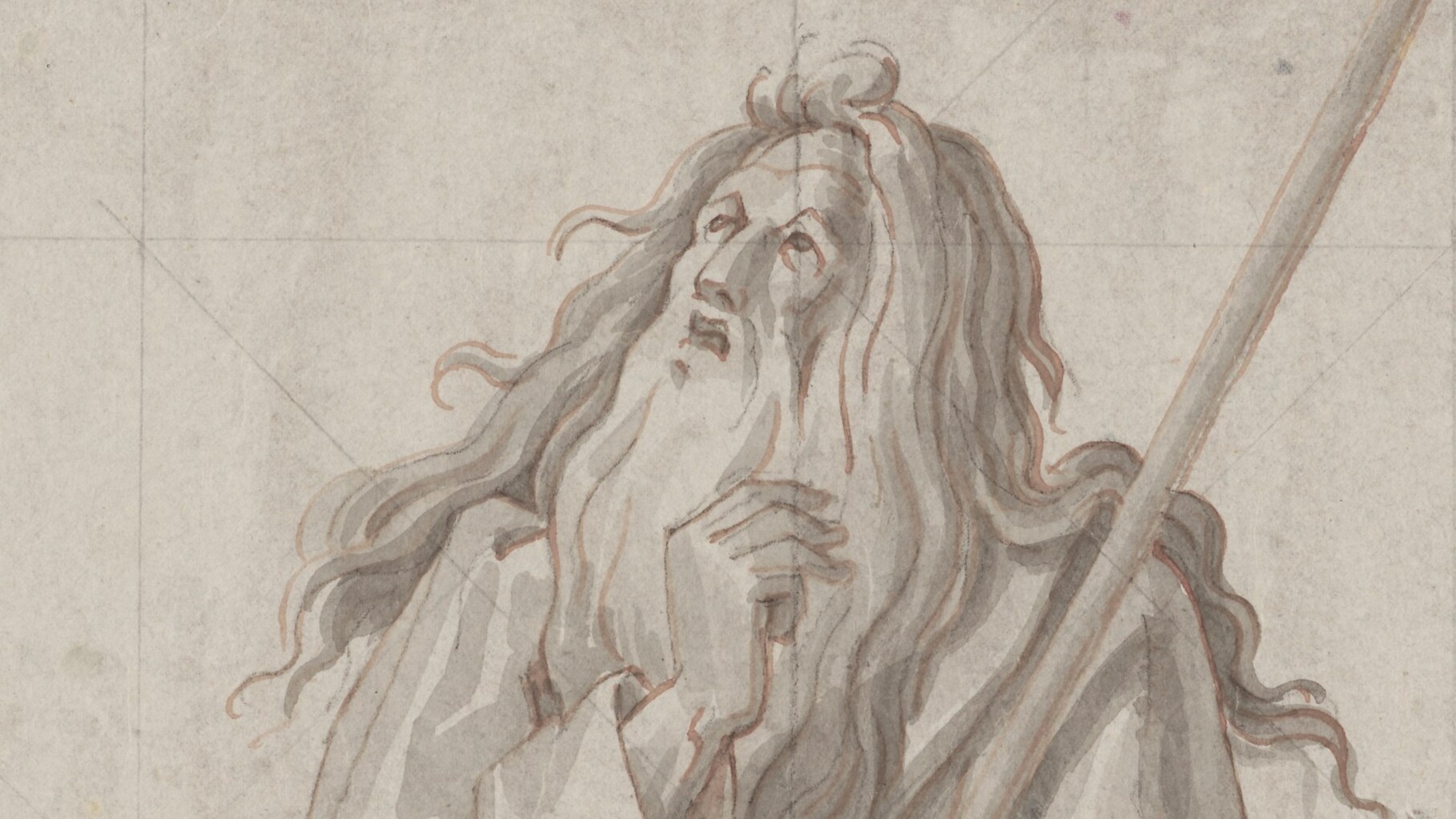
Image credit: Detail of “Abraham with Staff, Looking Up” by David Humbert de Superville. Photo by Finavon, 2021.
