Luke 9:23-24
NL

BibleHub

23 Then he saidA to them all,B “If any wishC to comeD afterE me,

Notes on verse 23a

A “said” = eiron. This is to speak say, answer, command.
B “all” = pas. This is all, every.
C “wish” = thelo. This is to wish, desire, will, or intend. It is to choose or prefer in a literal or figurative sense. It can also mean inclined toward or take delight in. It can have a sense of being ready to act on the impulse in question.
D “come” = erchomai. This is to come or go.
E “after” = opiso. From the same as opisthen (after, back, from the rear); probably from opis (back); from optanomai (to appear, be seen); perhaps from horao (become, seem, appear). This is back, behind, after.

let them denyF themselves and take upG their crossH dailyI and followJ me. 

Notes on verse 23b

F “deny” = arneomai. From a (not) + rheo (say, speak of). This is to deny, disown, refuse, repudiate someone or a previously held belief, to contradict.
G “take up” = airo. This is to lift up in a literal or figurative sense. So, it could mean to lift, carry, or raise. It could also imply lifting something in order to take it away or remove it. Figuratively, this can be used for raising the voice or level of suspense. It can mean sailing off as raising the anchor. It can also correspond to a Hebrew expression for atonement of sin (lift/remove sin).
H “cross” = stauros. From the same as histemi (to stand, cause to stand). This is an upright stake, cross. Literally refers to the horizontal beam of a Roman cross, generally carried by the one convicted to die.
I “daily” = hemera. Perhaps from hemai (to sit). This is day, time, or daybreak.
J “follow” = akoloutheo. From a (with, fellowship, union) + keleuthos (road, way). This is to accompany or follow someone, especially the way a disciple does.

24 For those who wantK to saveL their lifeM will loseN it, and those who lose their life for my sake will save it. 

Notes on verse 24

K “want” = thelo. Same as “wish” in v23. See note C above.
L “save” = sozo. From sos (safe, rescued, well). This is to save, heal, preserve, or rescue. Properly, this is taking someone from danger to safety. It can be delivering or protecting literally or figuratively. This is the root that “savior” and “salvation” come from in Greek.
M “life” = psuche. From psucho (to breathe, blow). This is breath, the breath of life, the self, individual, soul. This is the word for that which makes a person unique – their identity, will, personality, affections. This isn’t the soul as the immortal part of us, but as our individuality. It is also not life as a general concept, but specific to people. This is where the words psyche and psychology come from.
N “lose” = apollumi. From apo (from, away from) + ollumi (to destroy or ruin; the loss that comes from a major ruination). This is to destroy, cut off, to perish – perhaps violently. It can also mean to cancel or remove.

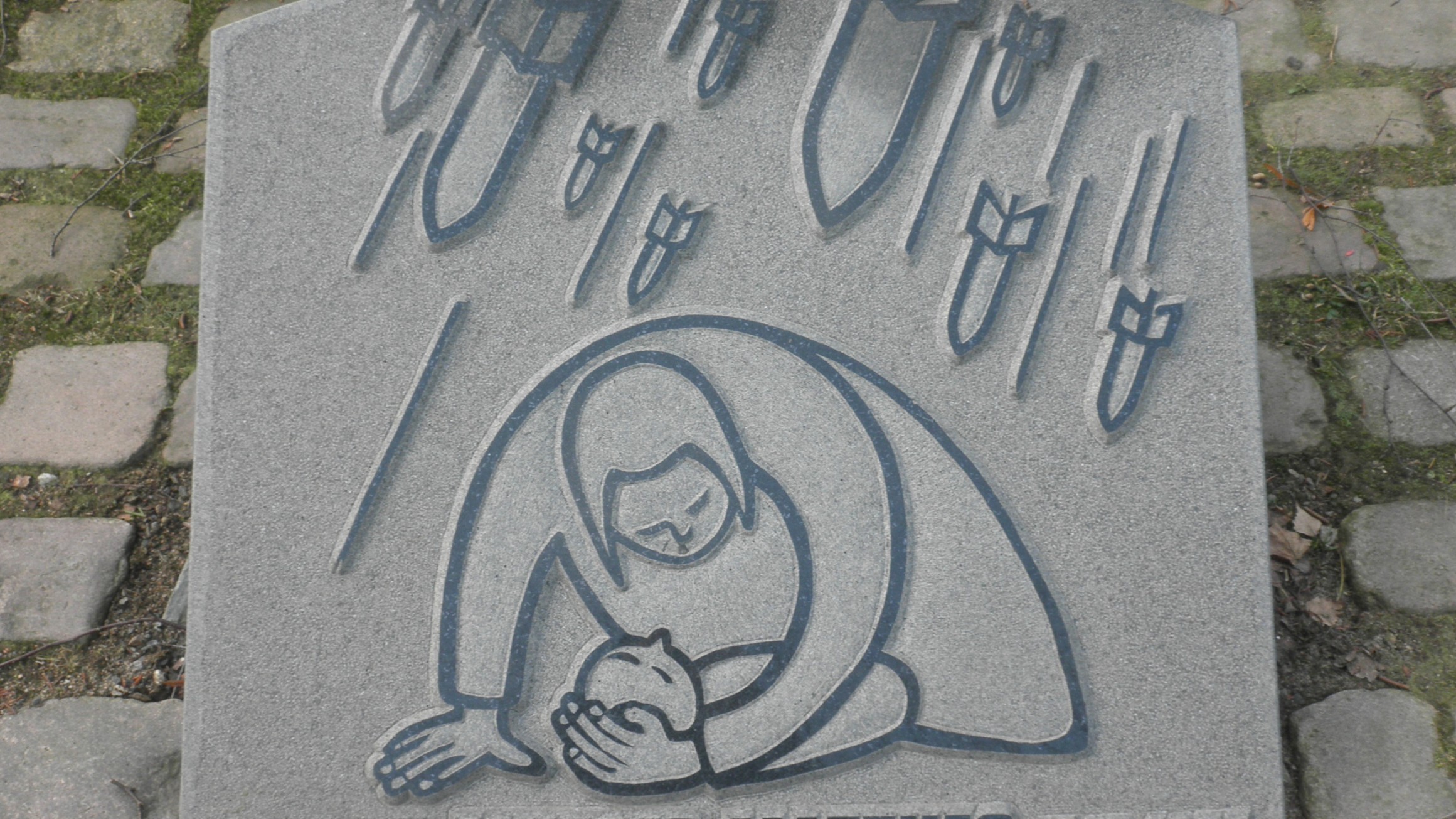
Image credit: Memorial stone for a mother, Erna Matthes, who gave her life for her child when Freiburg was bombed on October 7, 1944. Photo by Wikswat, 2018.